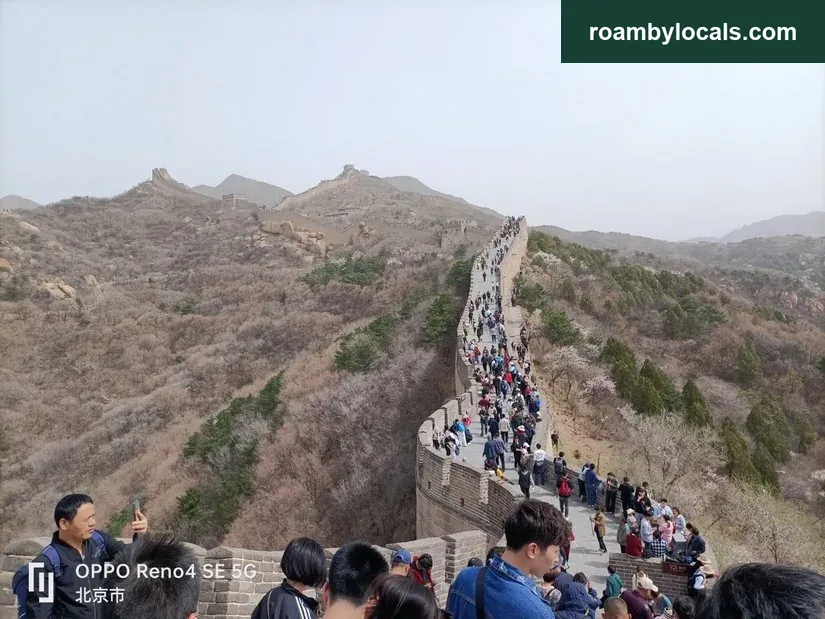
By train to Badaling
Monday, 10 April, sunny. We climbed the Great Wall at Badaling.
Our son was working today, so we were on our own. We had returned late from crosstalk at Deyunshe the previous evening, and I only got up at 6:30, without my usual stroll. After breakfast, we took the metro early to Beijing North station and boarded train D6703 to Badaling. Although we had booked on 31 March, tickets to Badaling were already hard to get. We bought two Beijing–Yanqing tickets and got off early at Badaling, paying 11 yuan extra per ticket.
At the station 40 minutes early.
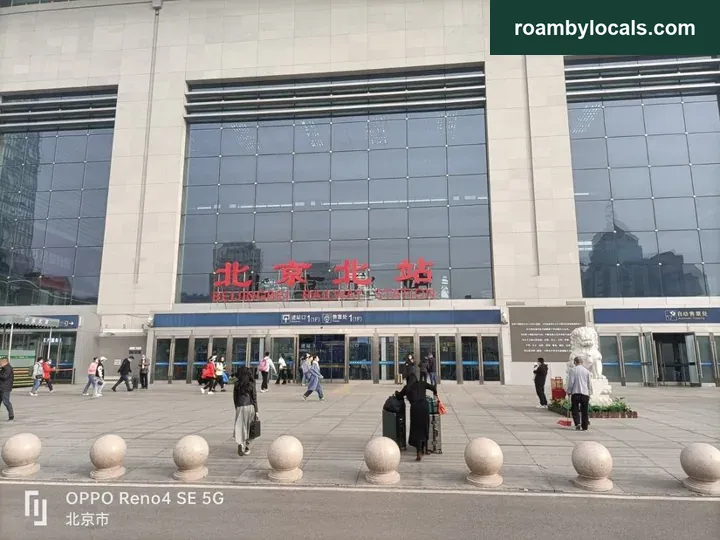
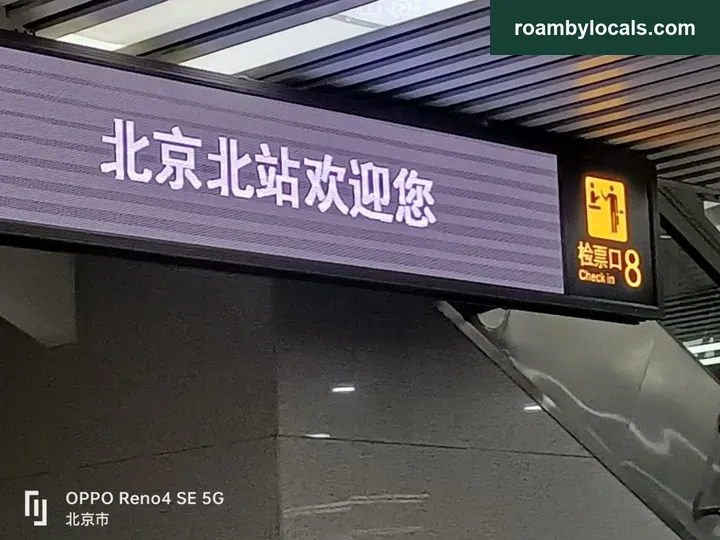
Booking information.

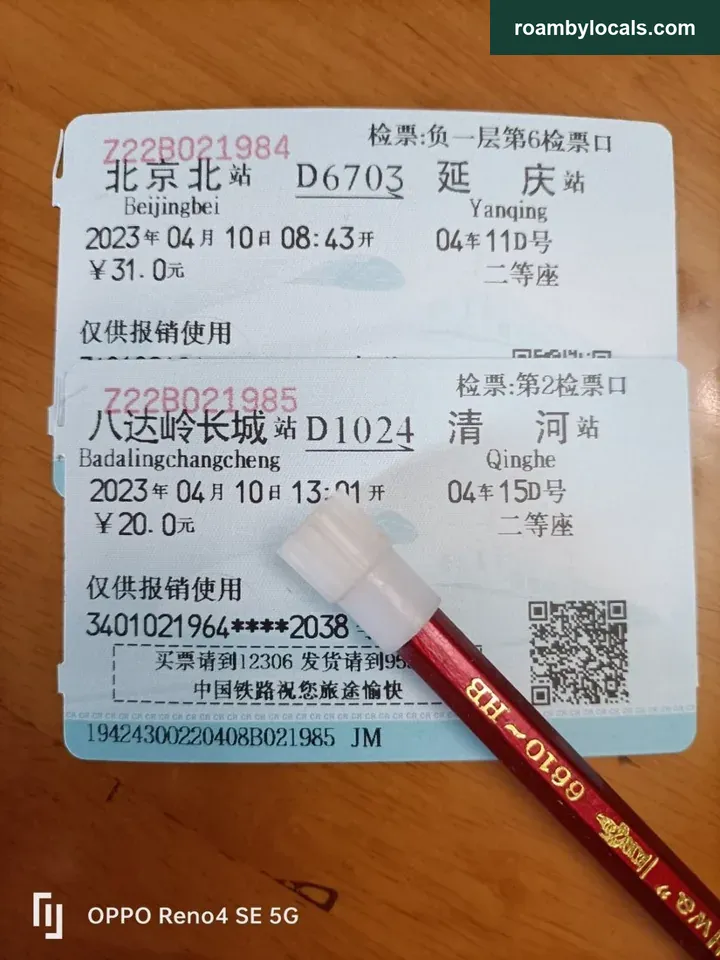
Through the ticket check and aboard: this unusually long train had 16 carriages. It took several minutes to reach carriage 4. I had chosen window seats to enjoy the scenery between Beijing and Badaling, but apart from the city-to-Qinghe section above ground, most of the journey was underground. I will say no more; see today’s WeChat Moments post.
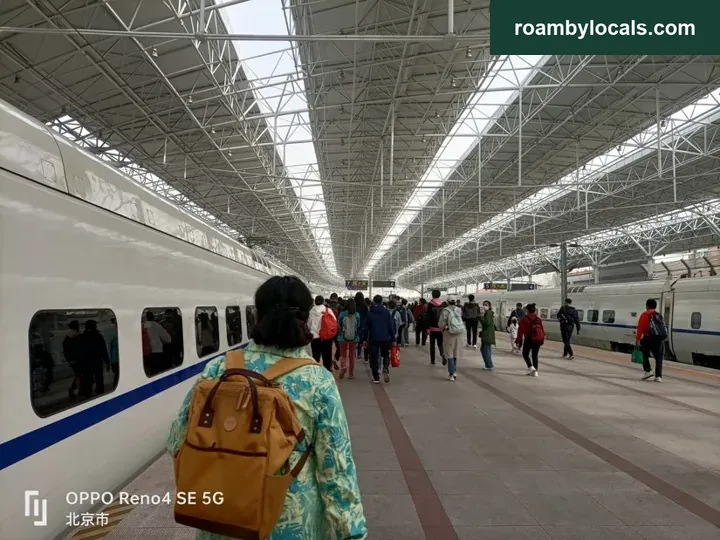
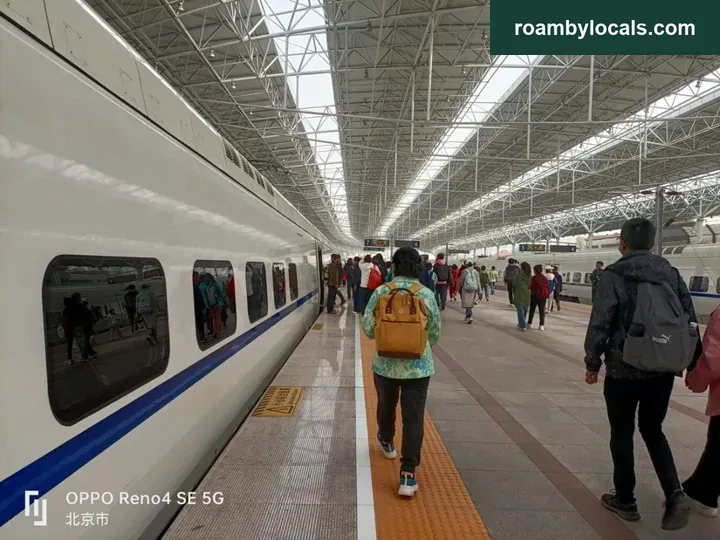
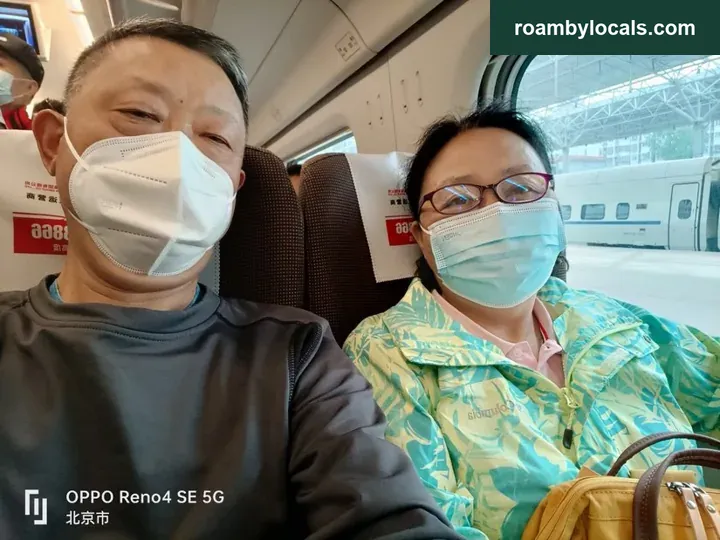
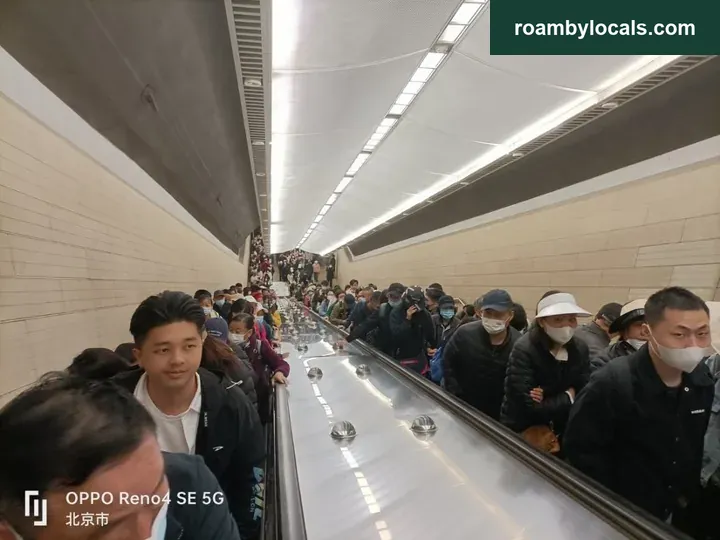
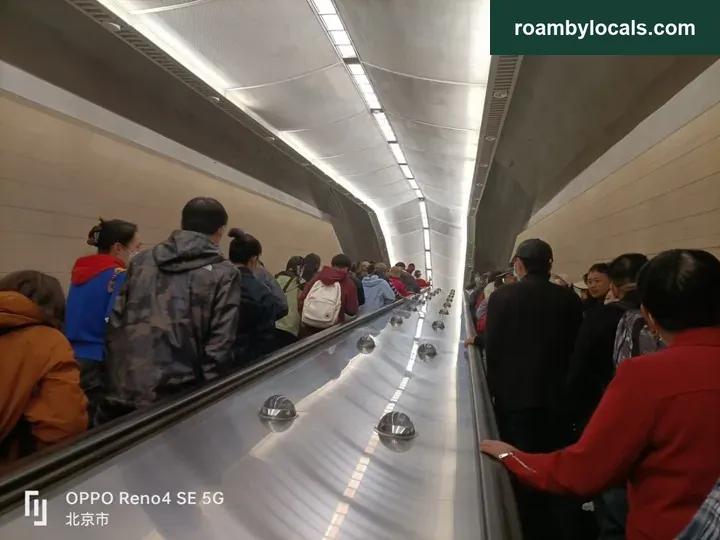
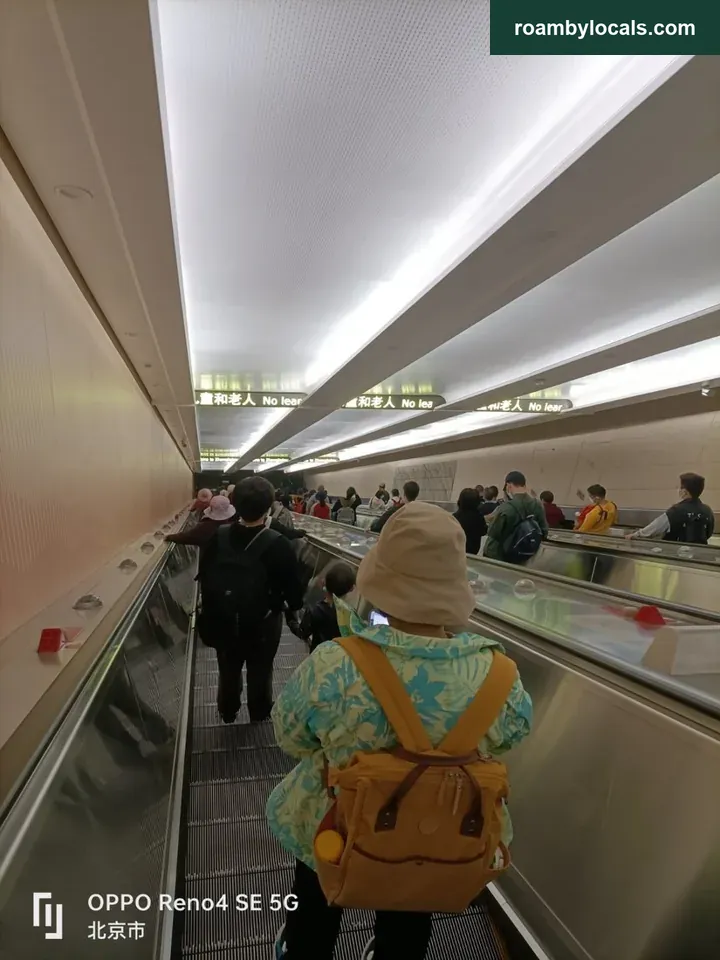
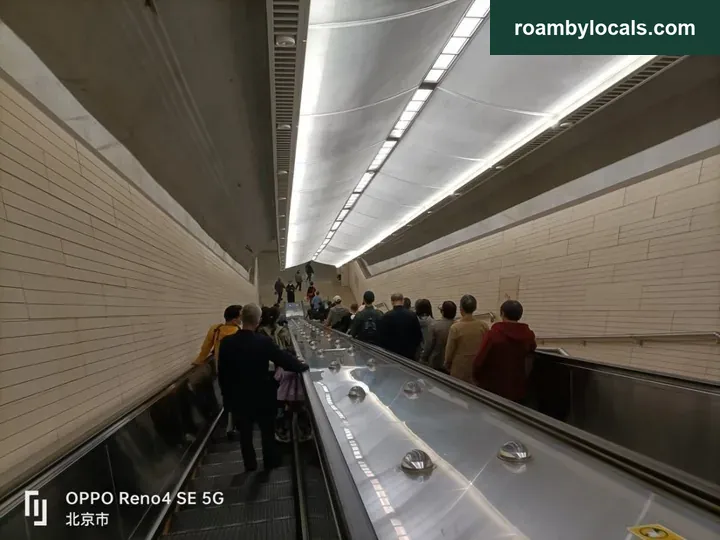
At first I thought only the train was travelling through tunnels. At Badaling, even the station was more than 100 metres underground. No wonder the booking information warned that the gate was far from the platform and advised entering 30 minutes early.
My first WeChat Moments post after arriving in Beijing.

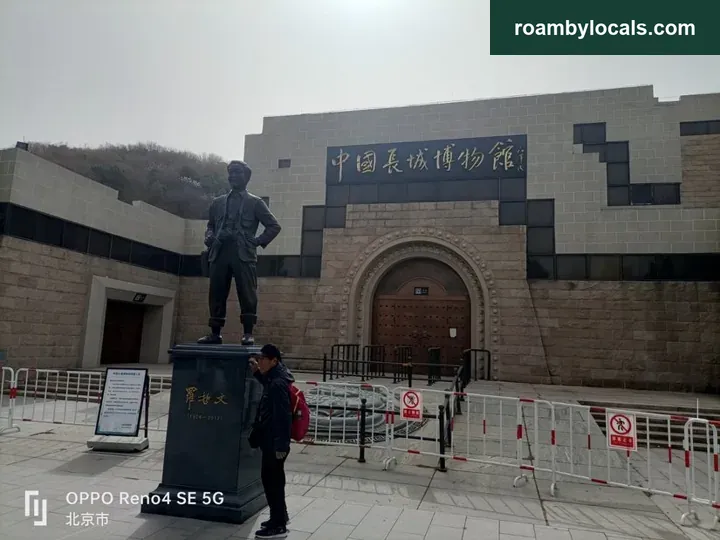
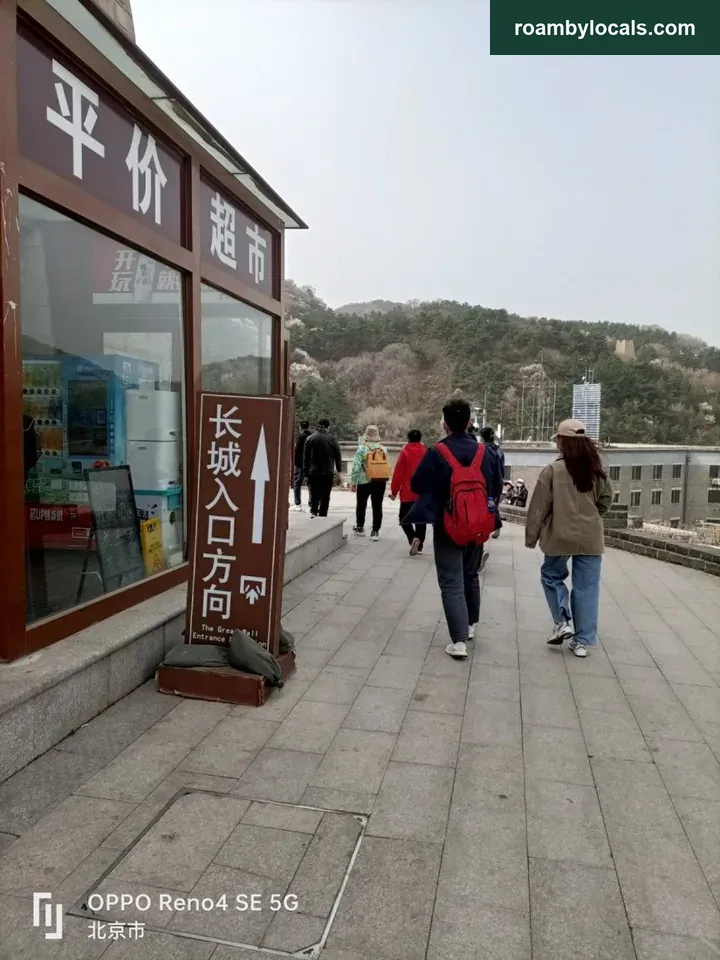
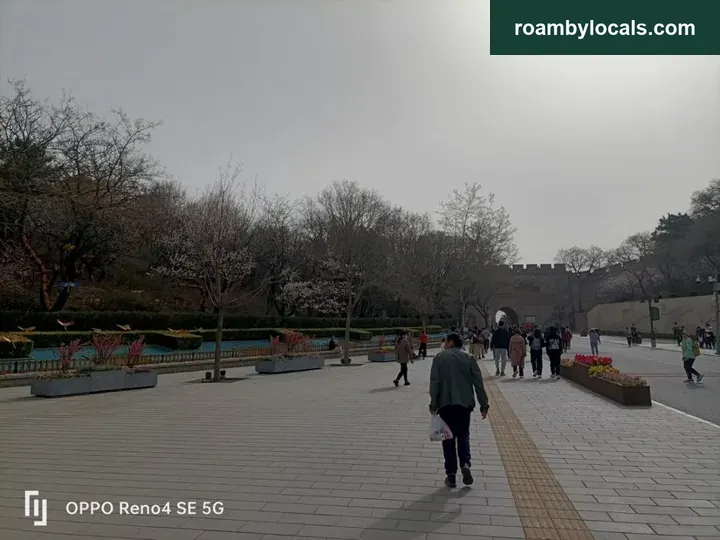
It was already 9:30 when we left Badaling station. Our return train departed at 13:00, and with 30 minutes needed to enter and wait, we had only 3 hours at the Great Wall. We hurried towards the entrance.
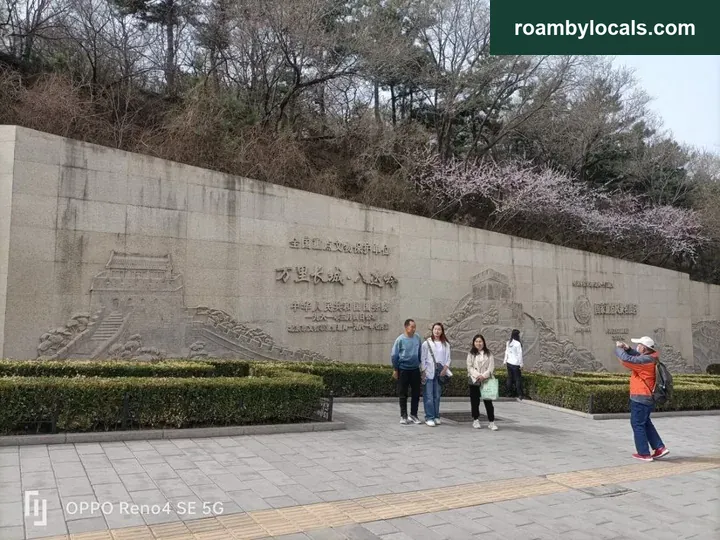
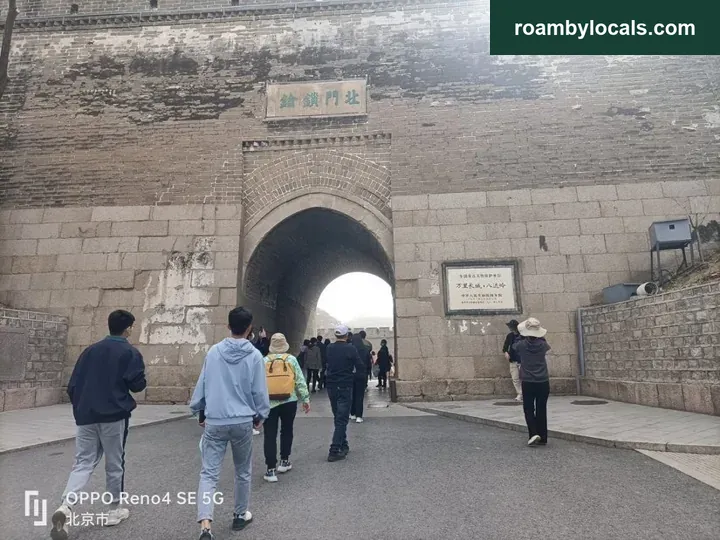
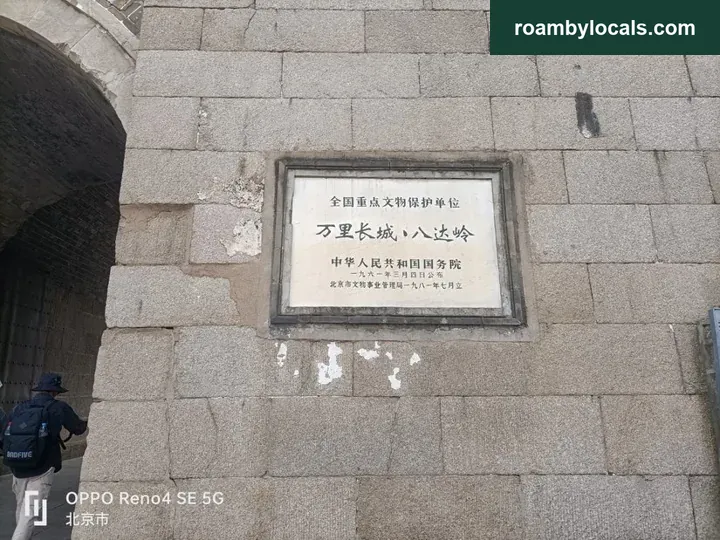
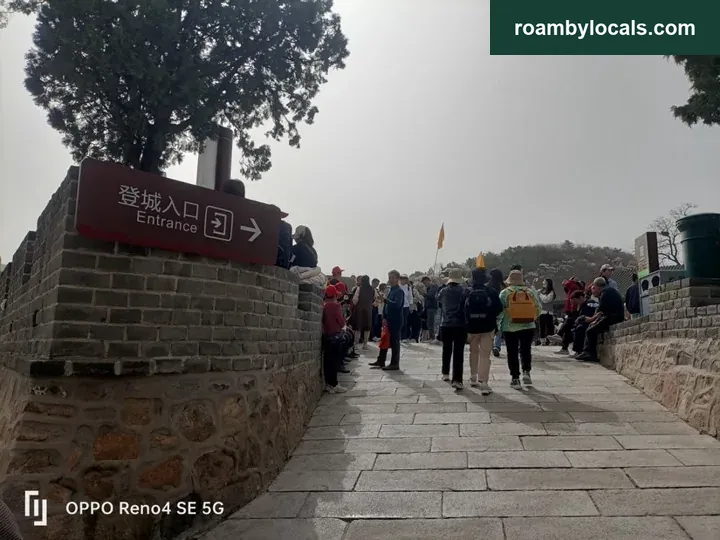
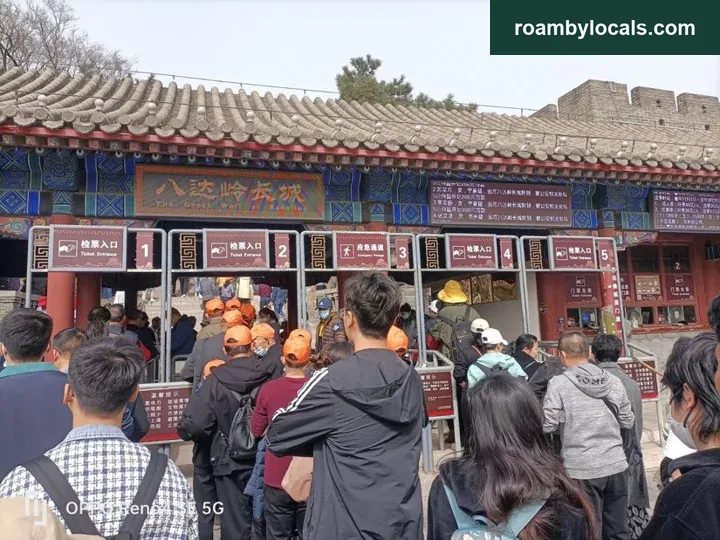
Choosing the northern wall
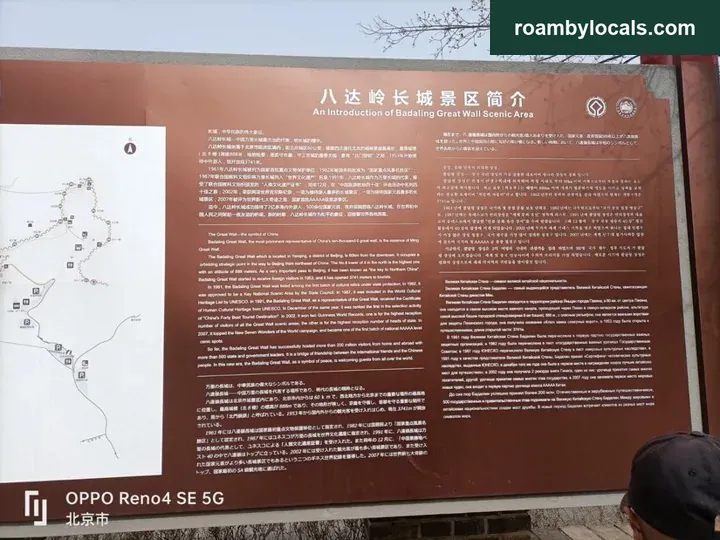
The Great Wall is a great symbol of the Chinese nation. Badaling is its outstanding representative and the essence of the Ming wall. At the northern mouth of the ancient Guangou route in the Jundu Mountains, Yanqing District, Beijing, it is a pass and an important part of this great ancient defensive work. An important outpost of Juyong Pass, it inspired the old saying: ‘Juyong’s strategic strength lies not at the pass but at Badaling.’
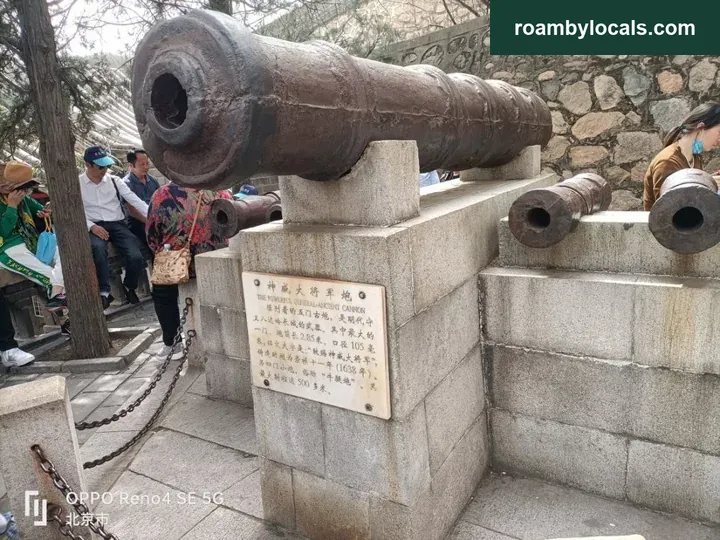
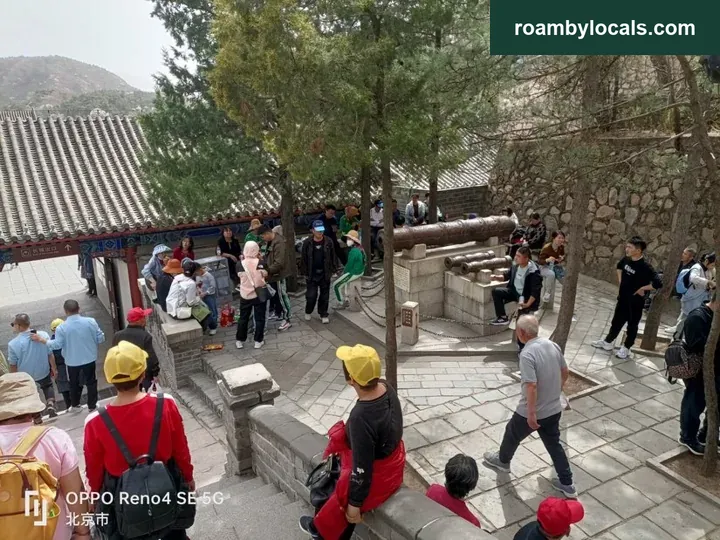
There were 5 ancient cannons displayed at the entrance.
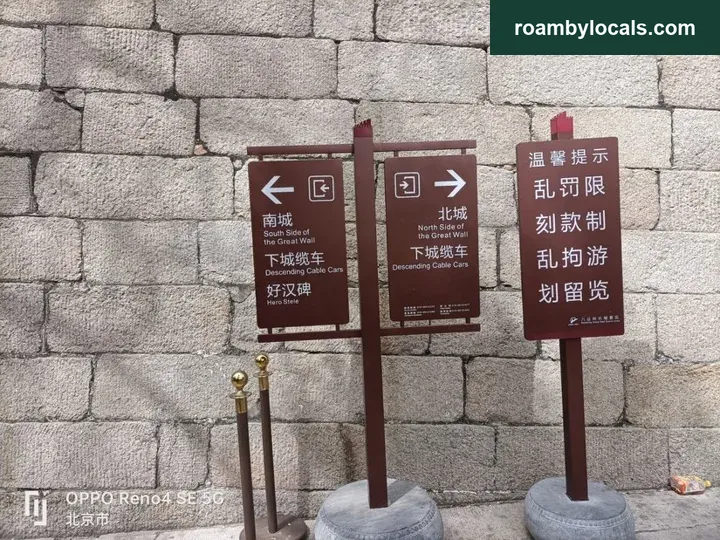
Badaling has southern and northern sections. The southern one is shorter; we chose the northern wall.
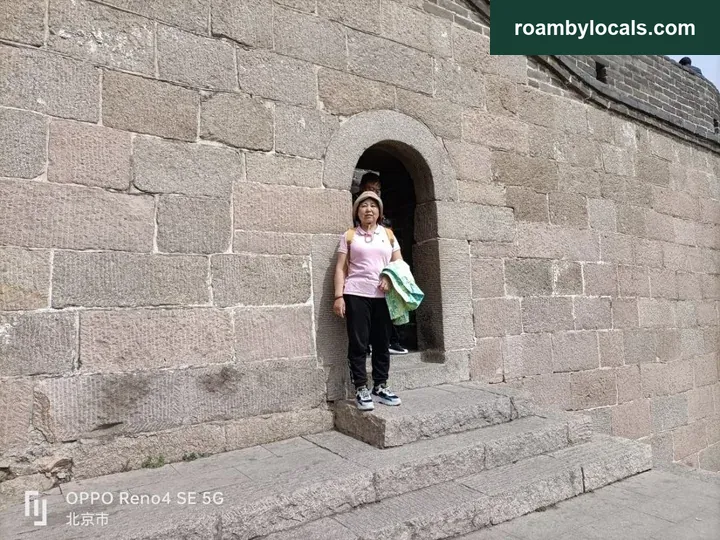
On the wall: first, a few photographs.
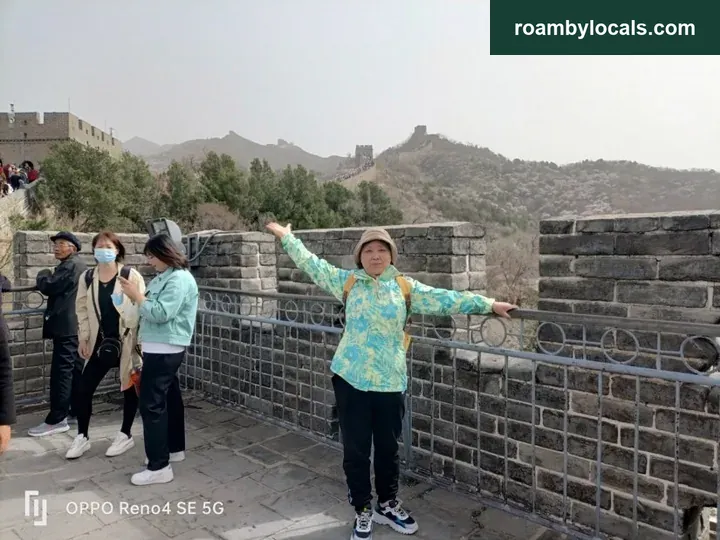
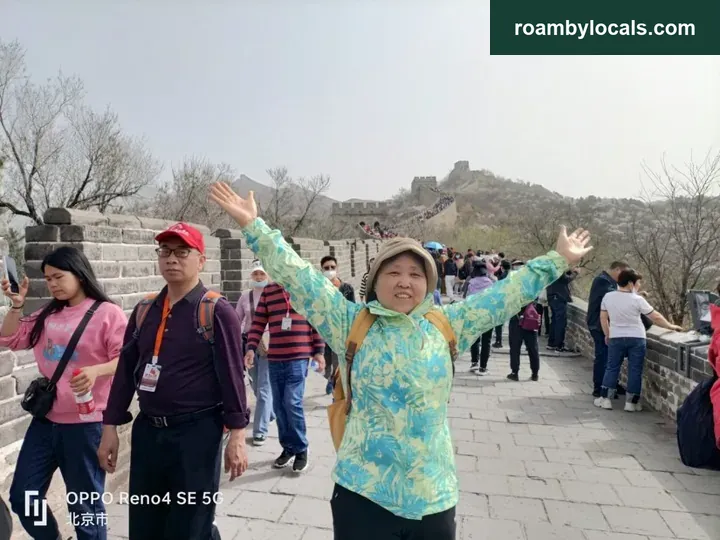
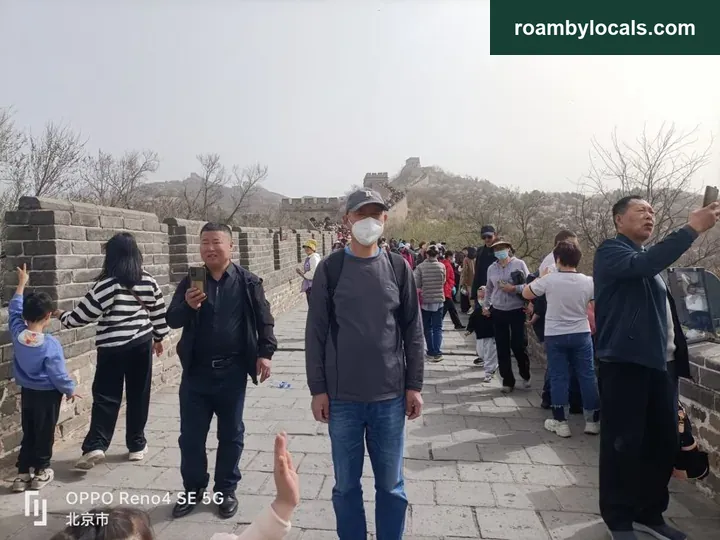
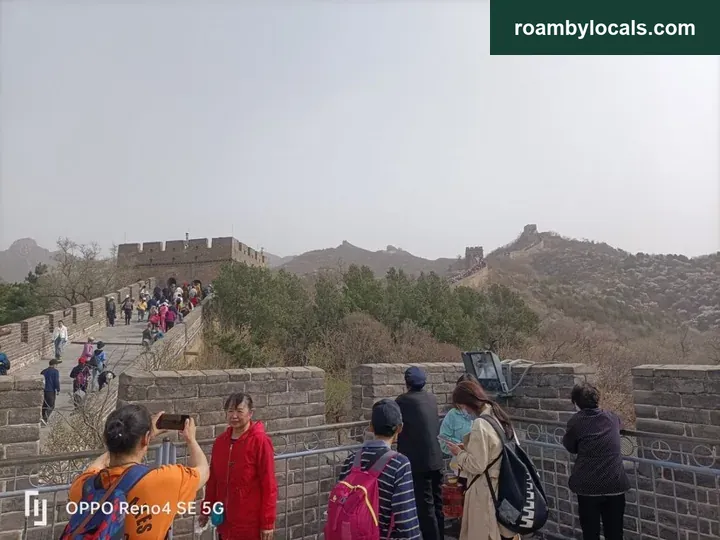
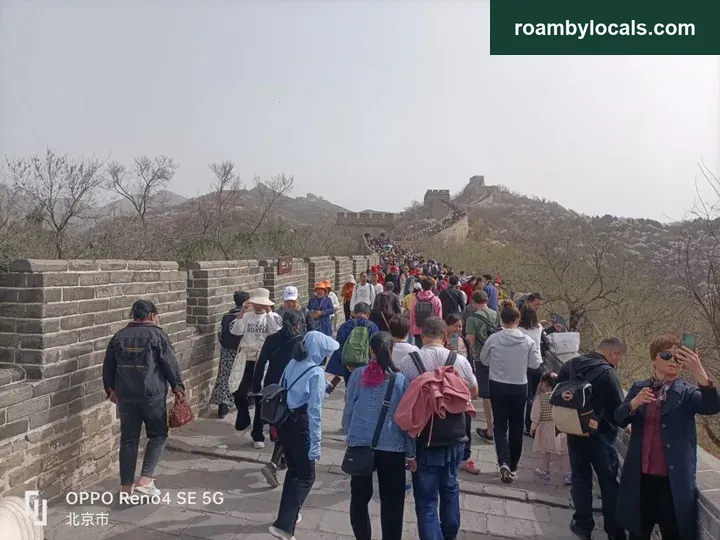
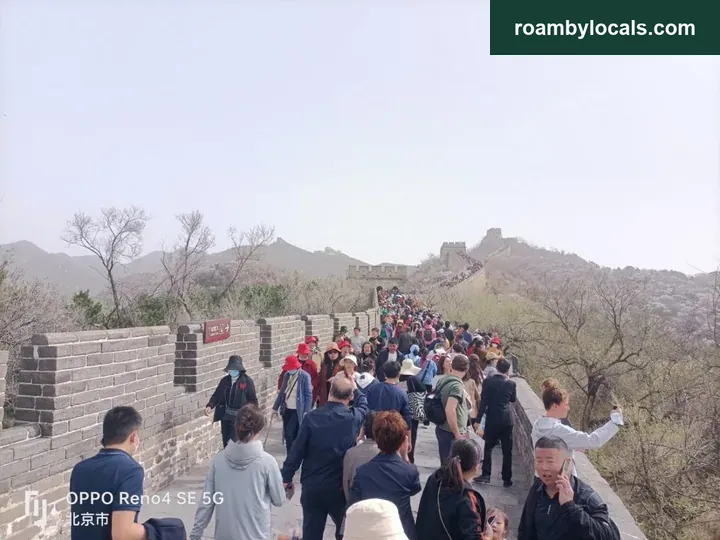
Masks off.
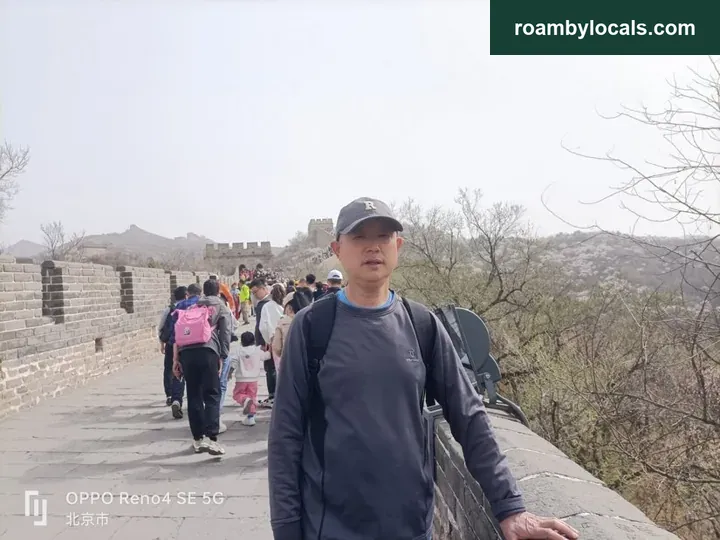
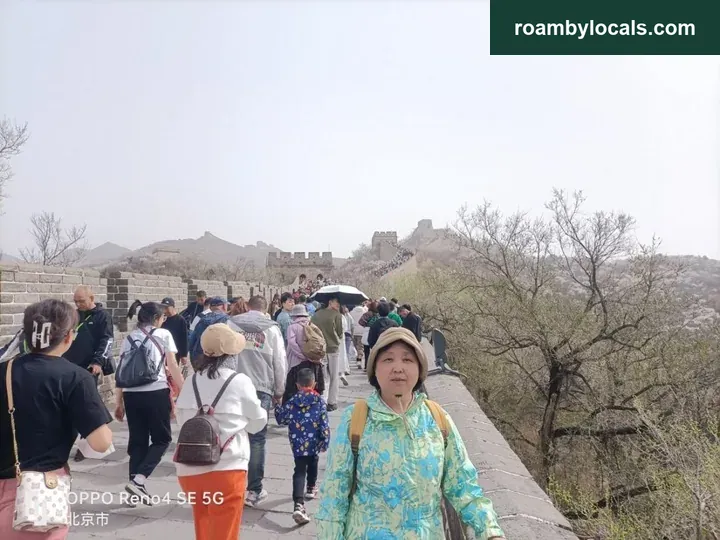
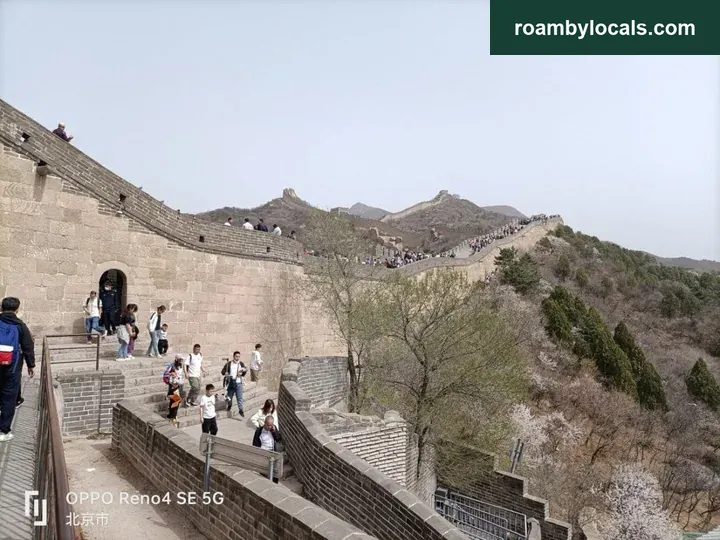
Looking towards the southern wall.
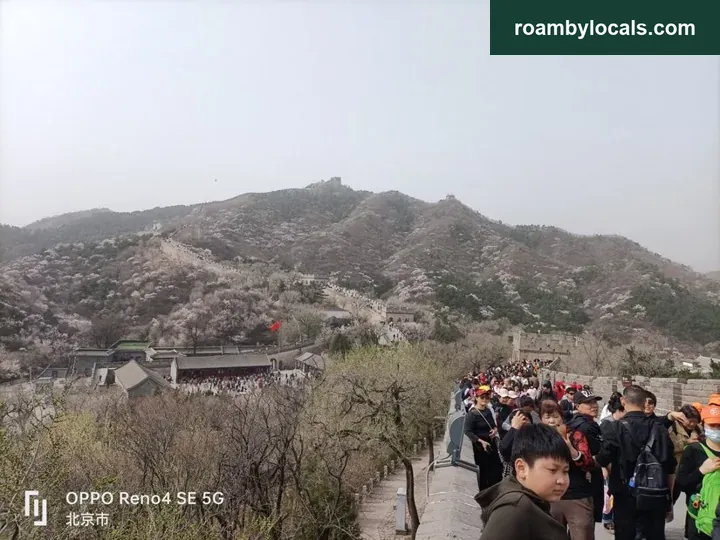
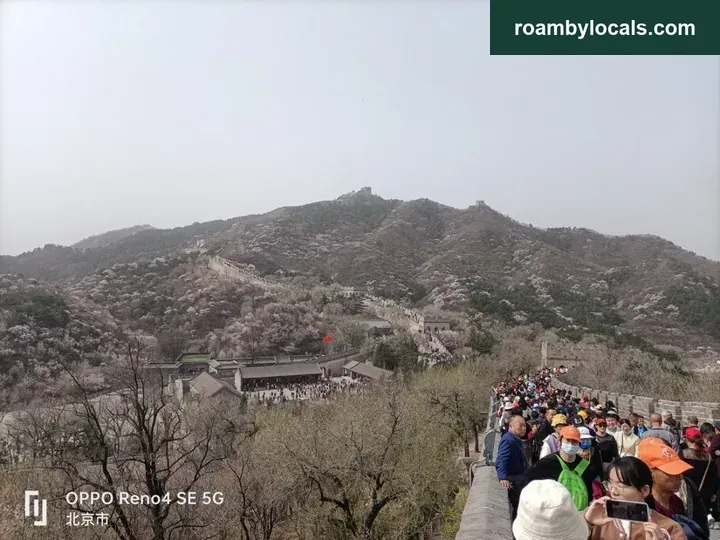
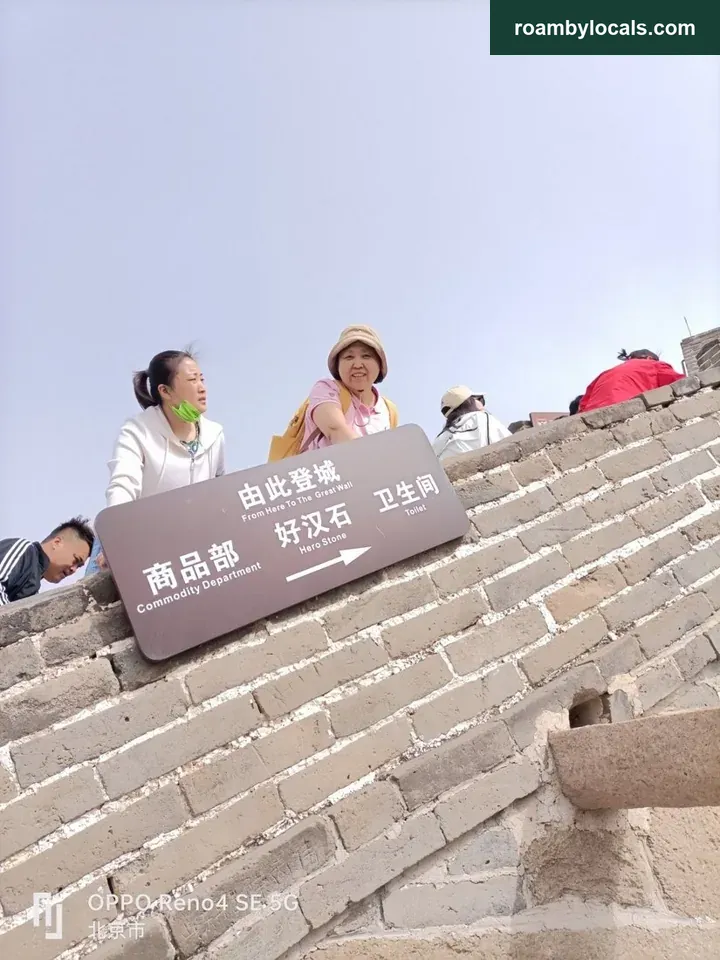
Climbing to Hero’s Stone
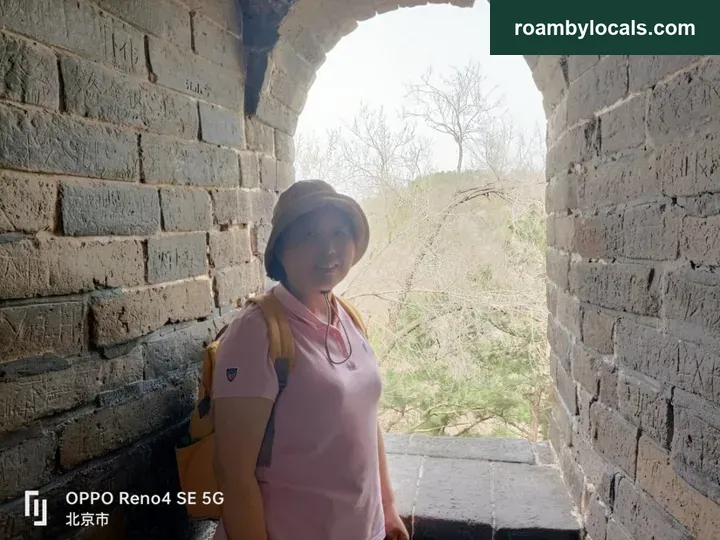
Climbing the Great Wall: tired but happy.
After some climbing, my wife took off her outer coat.


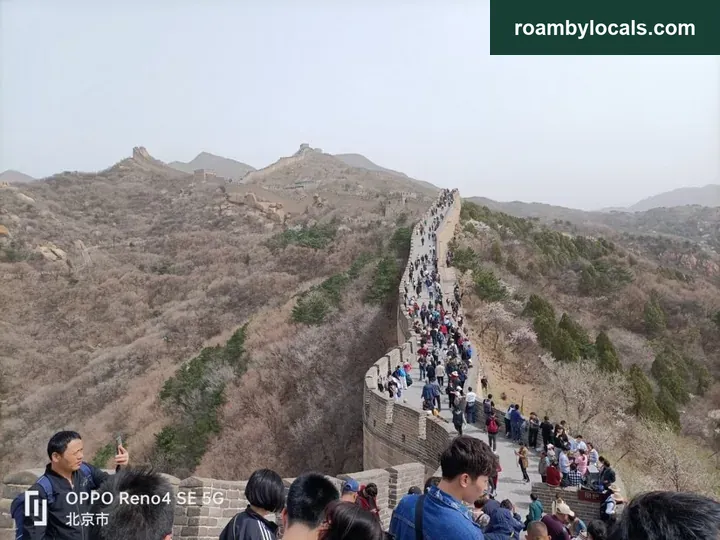
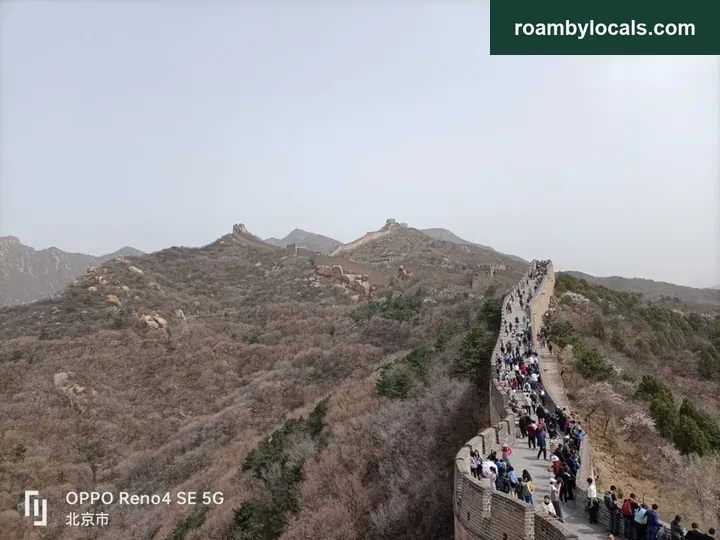
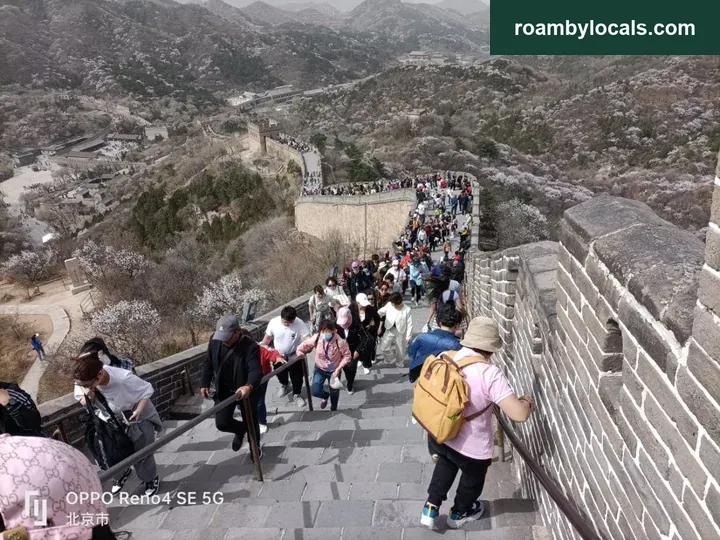
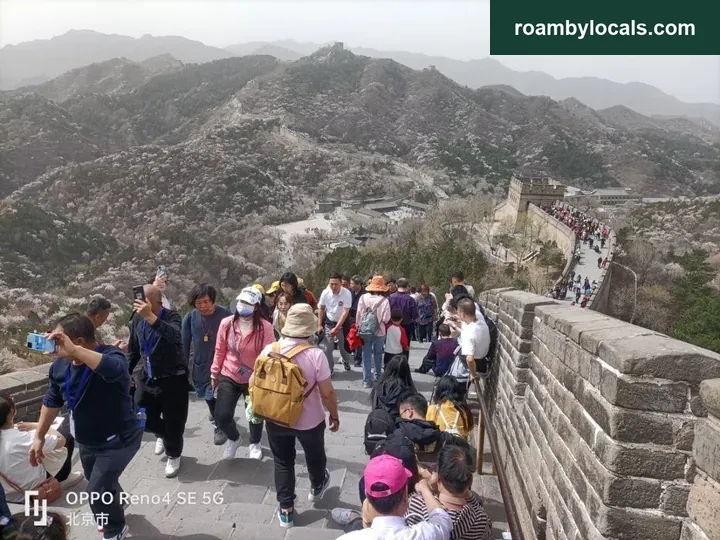
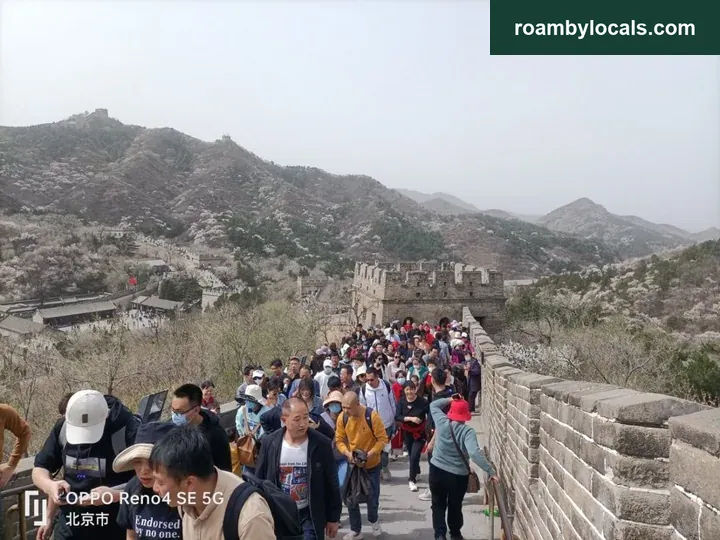
Even on a working day, there were plenty of visitors.
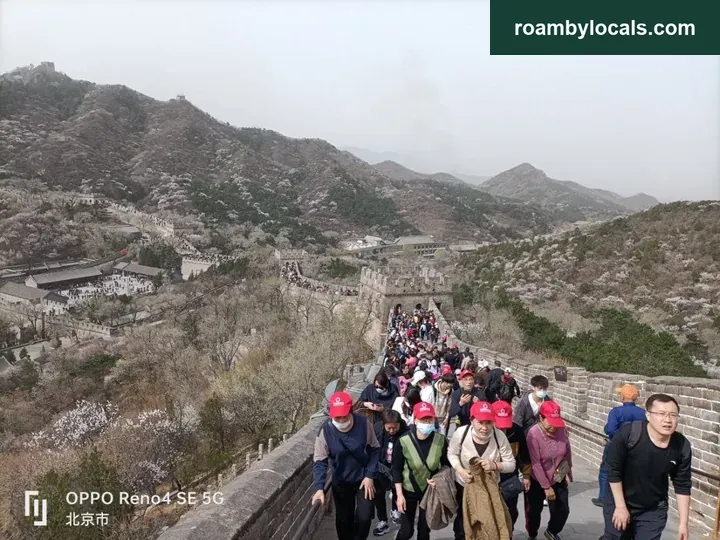
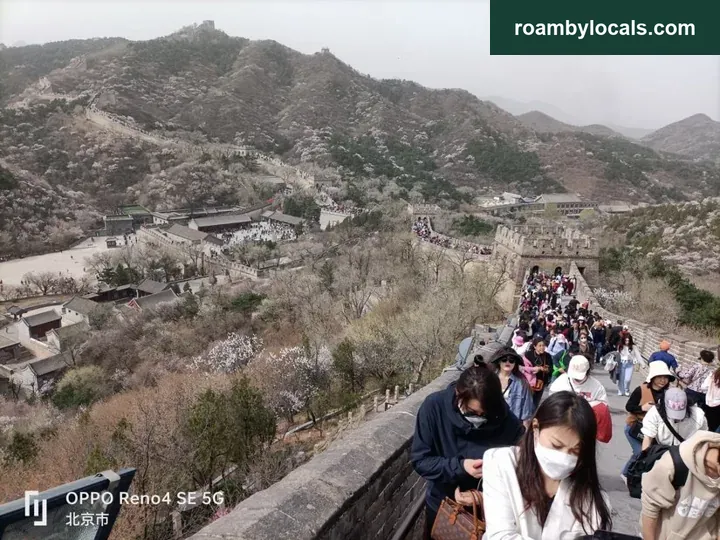
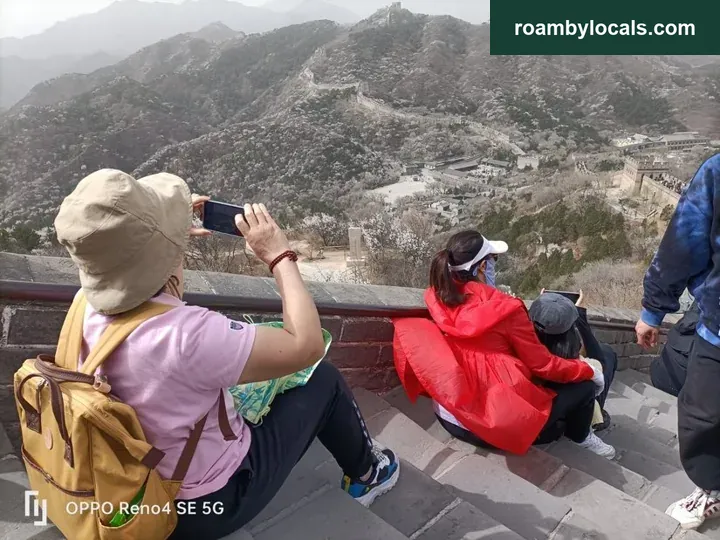
However tired, we did not forget to photograph the scenery inside and outside the wall.
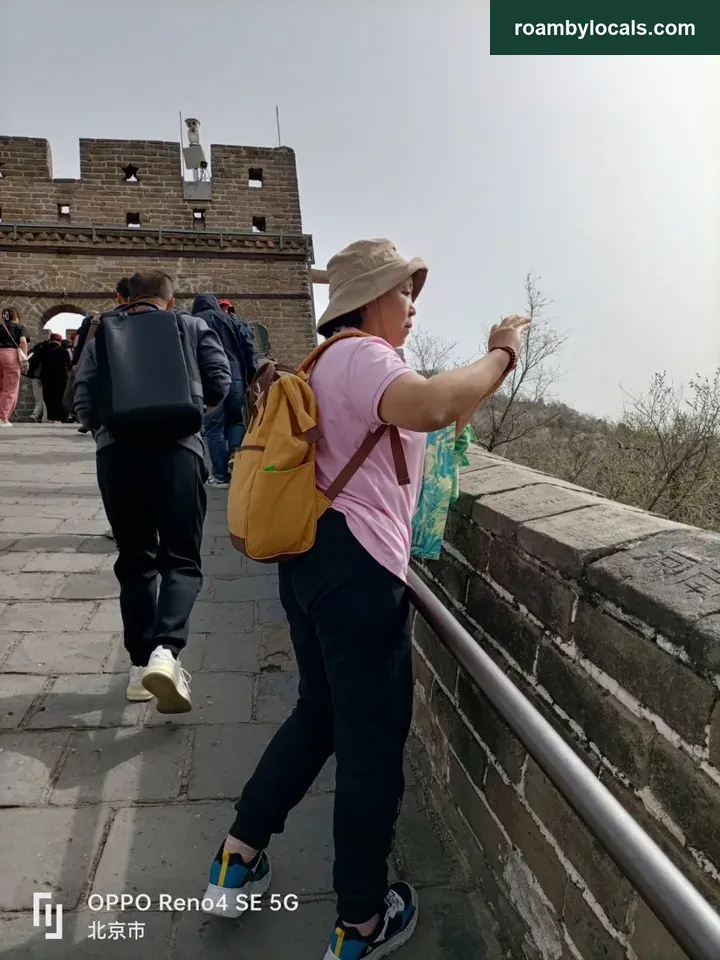
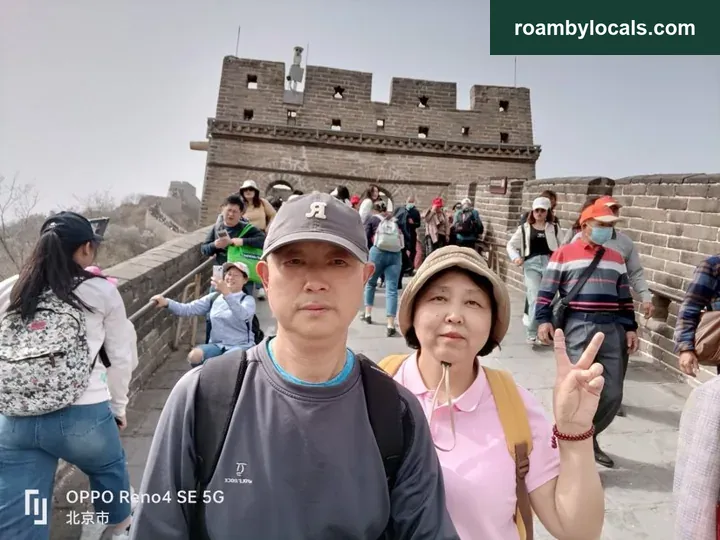
The north-facing battlements were so high.
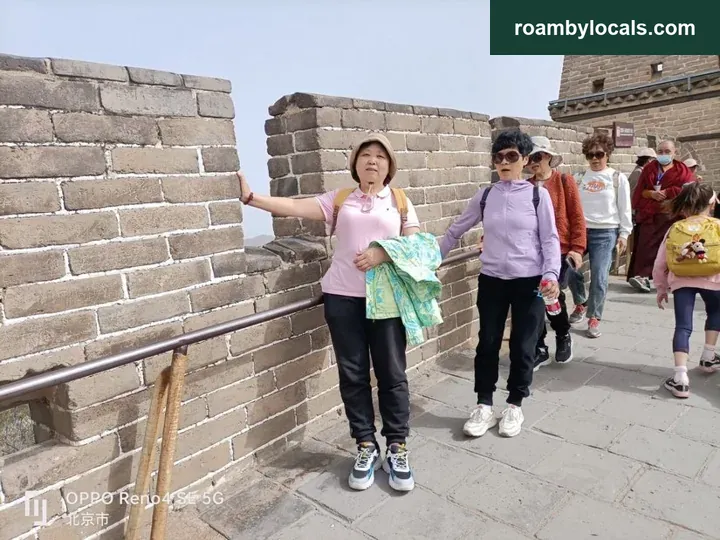
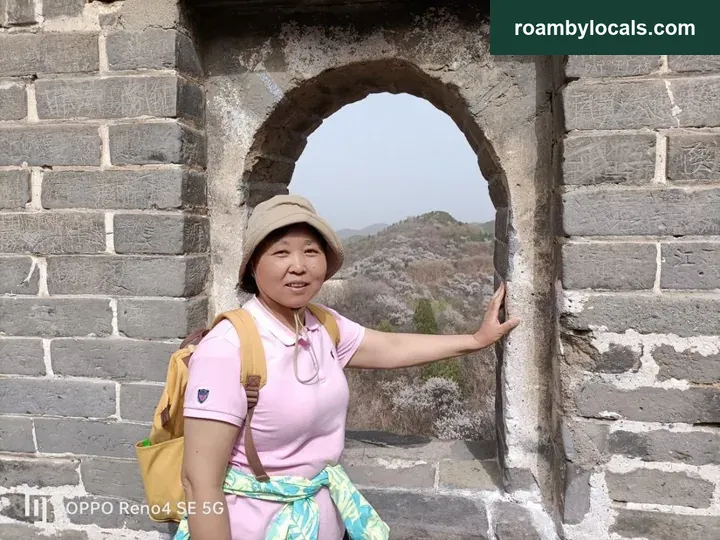
Nearly at Hero’s Stone.
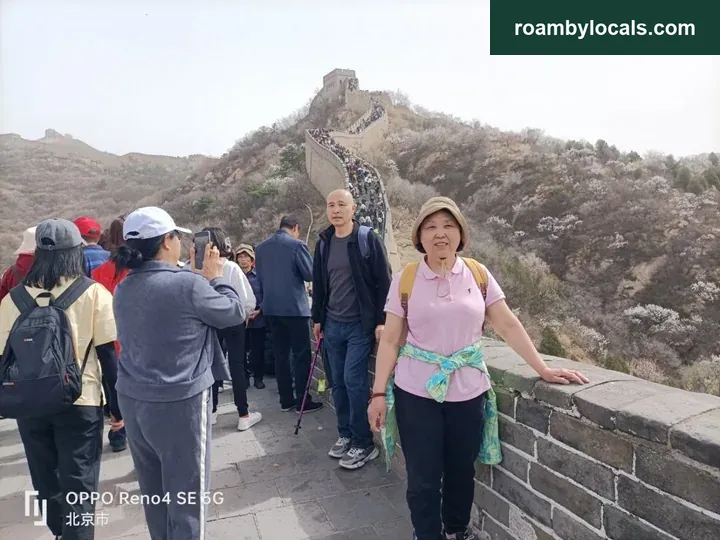
I took off my outer layer too.
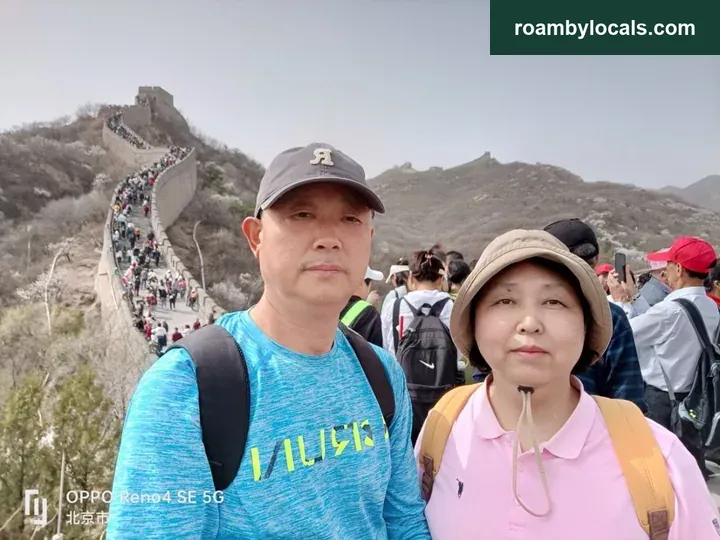
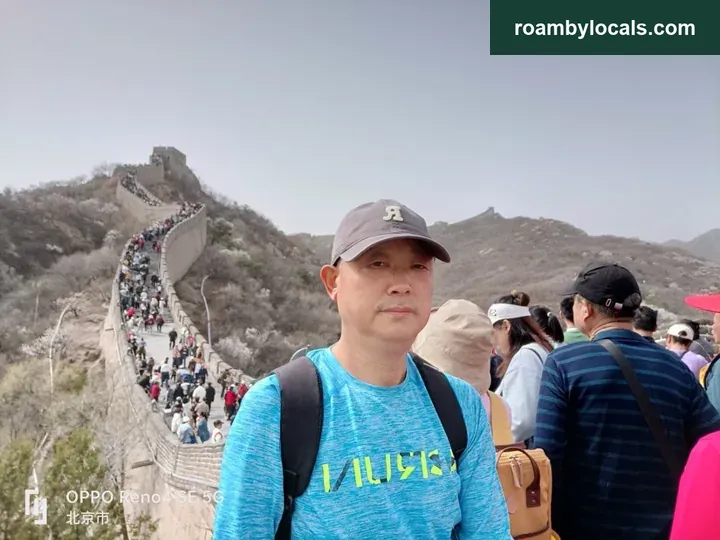
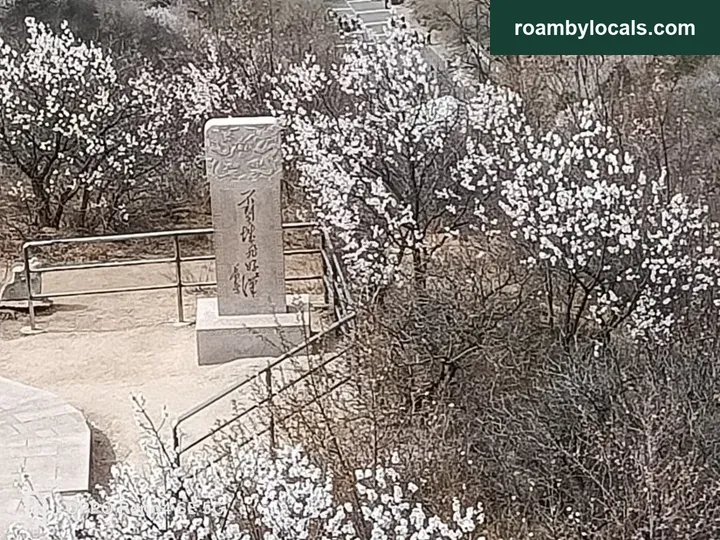
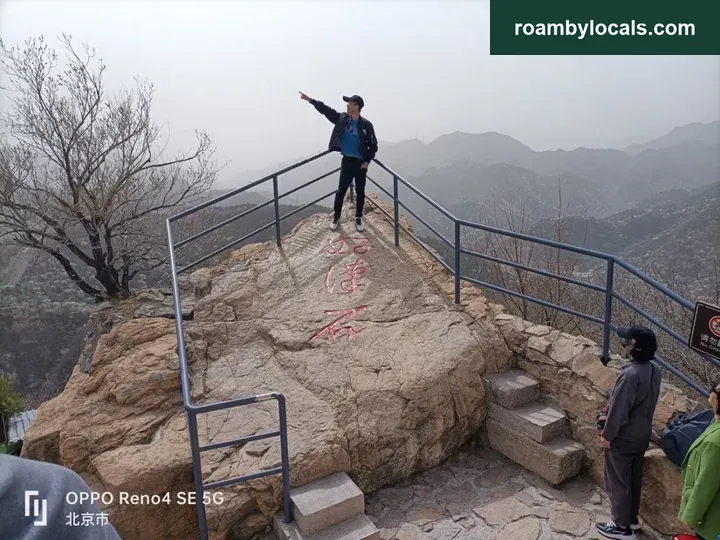
You are no hero until you have climbed the Great Wall: we reached Hero’s Stone.
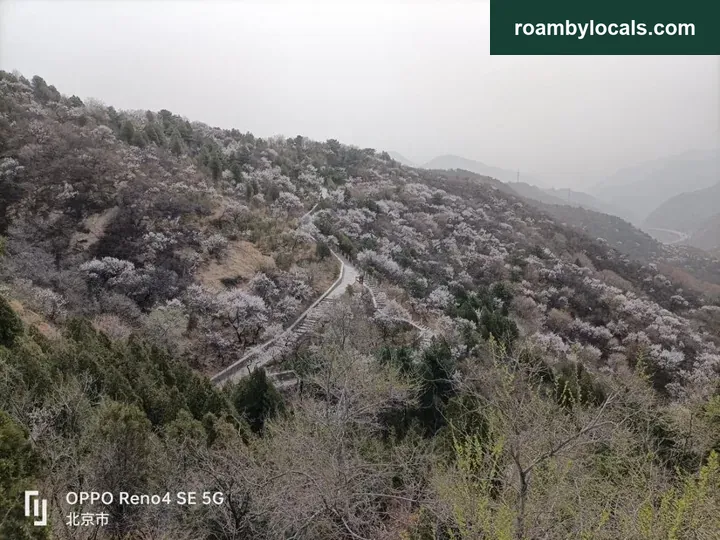
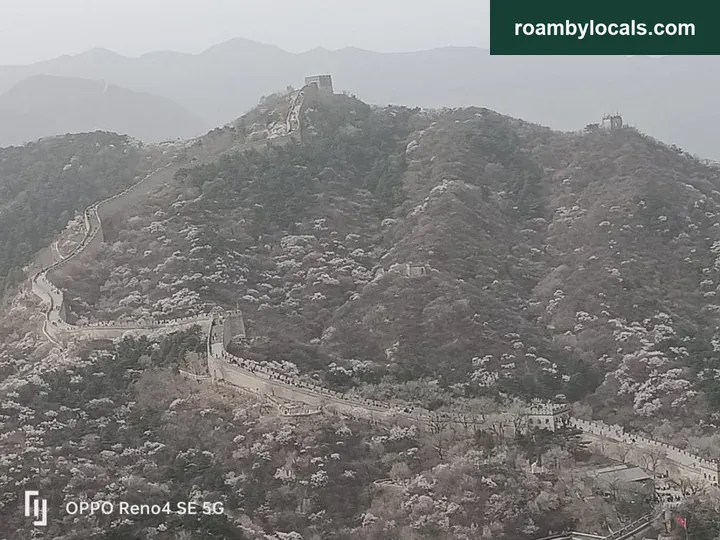
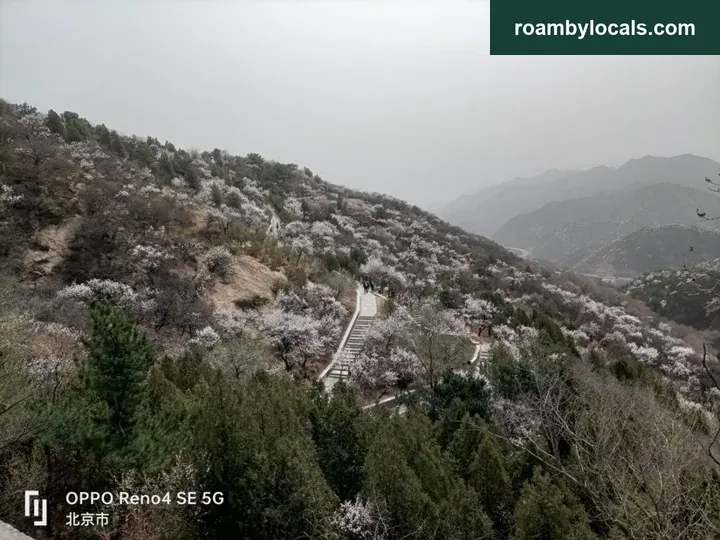
Apricot blossom covered the hills.
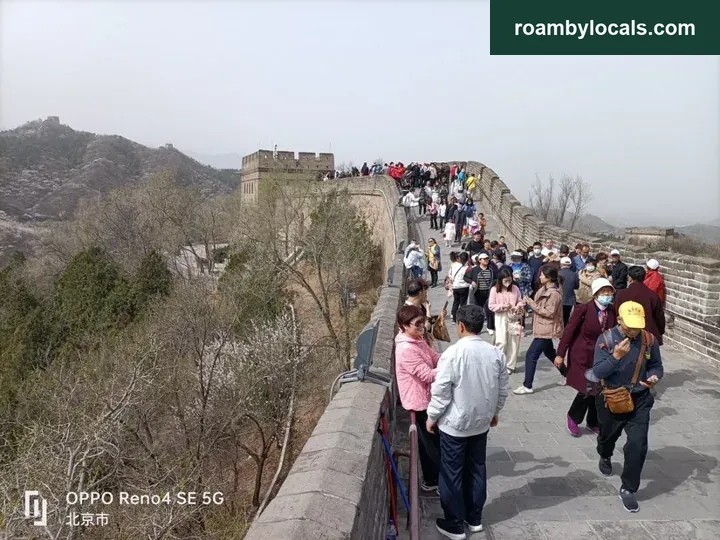
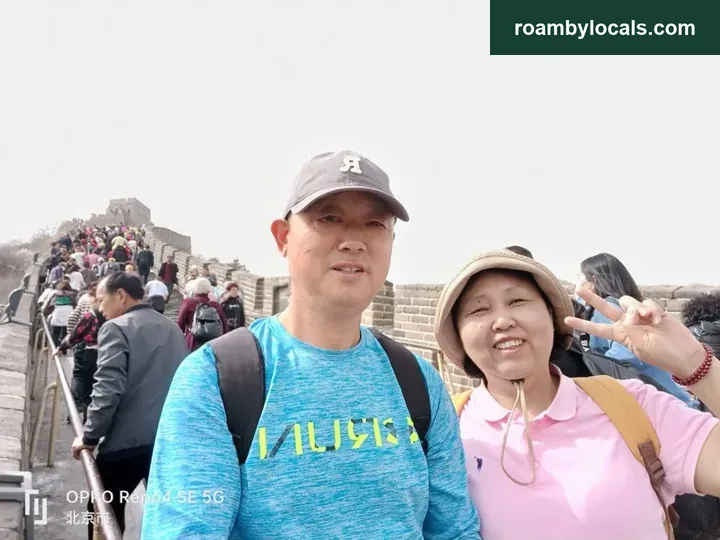
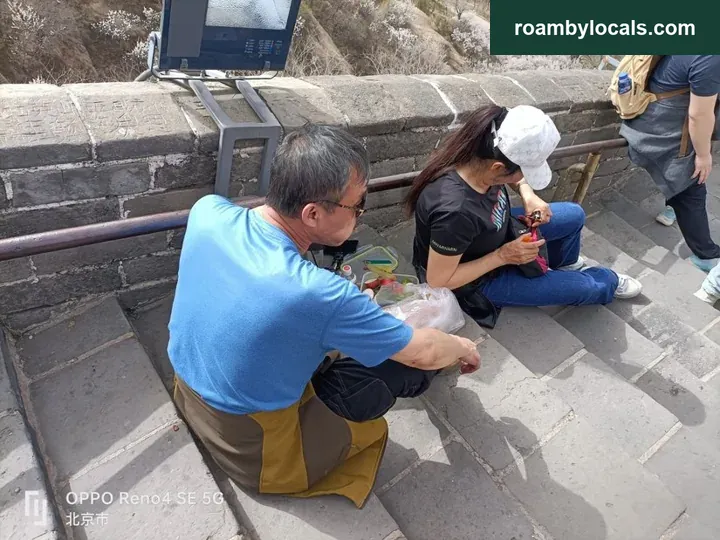
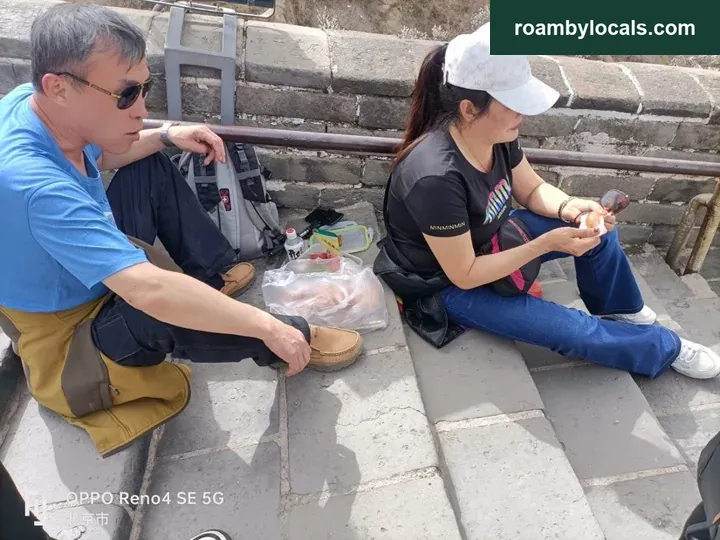
A couple from northeastern China rested while enjoying a little liquor.
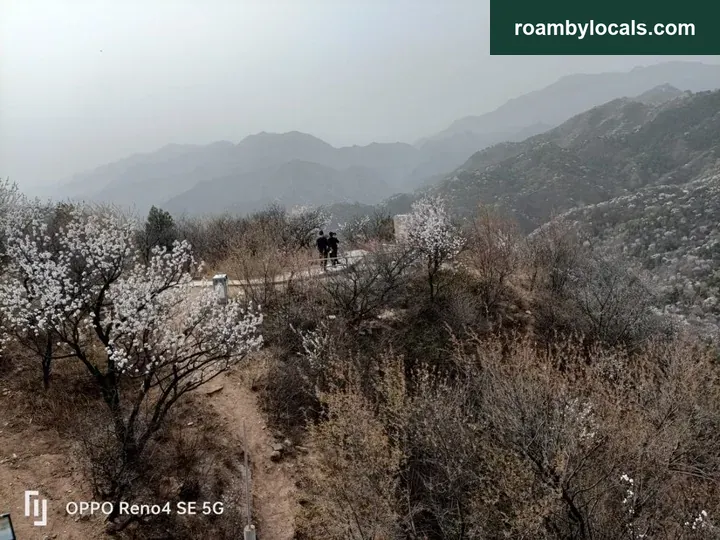
Hero’s Stone ahead: that really is a steep slope.
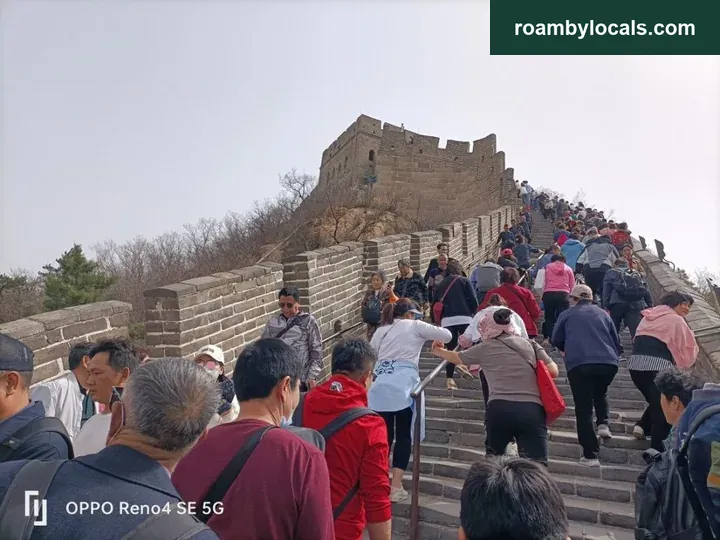
We sat on the steps for a rest too.
Ah, the stone inscription beneath the wall: ‘You are no hero until you have climbed the Great Wall.’
Back to the station
Beyond Hero’s Stone, far fewer people continued upwards. It was already 11 in the morning. After a short rest, we turned back. Walking and pausing, we reached Badaling high-speed railway station at about 12:10.
Returning.
The Badaling ticket-check entrance.
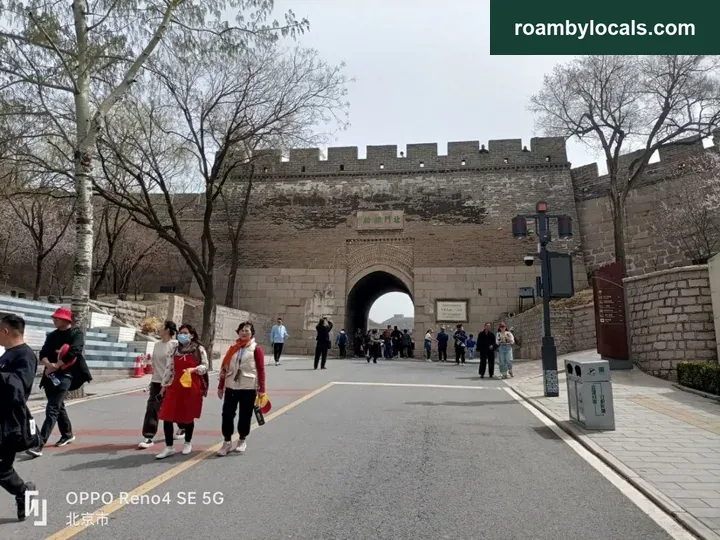
We reached the high-speed station 45 minutes before departure. With time to spare, I searched online again for information about Badaling’s Great Wall.
A little history while waiting
Badaling was the first section of the Ming wall opened to visitors. A national model for civilised scenic tourism, it is renowned worldwide for magnificent scenery, comprehensive facilities and deep cultural and historical significance.
After the gate fort and some wall sections were restored in 1953, it opened for sightseeing. Repeated repairs brought the accessible length to 3741 metres: 1176 in the south and 2565 in the north, with 16 watchtowers.
In March 1961, ‘Great Wall — Badaling’ was named among the first nationally protected cultural heritage sites.
In 1961, the State Council designated Badaling’s gate fort and wall as nationally protected cultural heritage.
In 1982 it became a national key scenic area. As an important part of the Beijing Badaling–Ming Tombs scenic area, it entered the State Council’s first national scenic-area list.
In 1984, under Comrade ***’s initiative ‘Love our China, restore our Great Wall’, the old stronghold gained a new appearance. Successive restoration of 19 watchtowers and 3741 metres of wall brought the total visitor area to 1.9 hectares.
In 1986, Badaling became one of the New Sixteen Sights of Beijing and ranked first among China’s ten major scenic attractions.
In 1987 it entered UNESCO’s World Heritage List.
The return to Qinghe
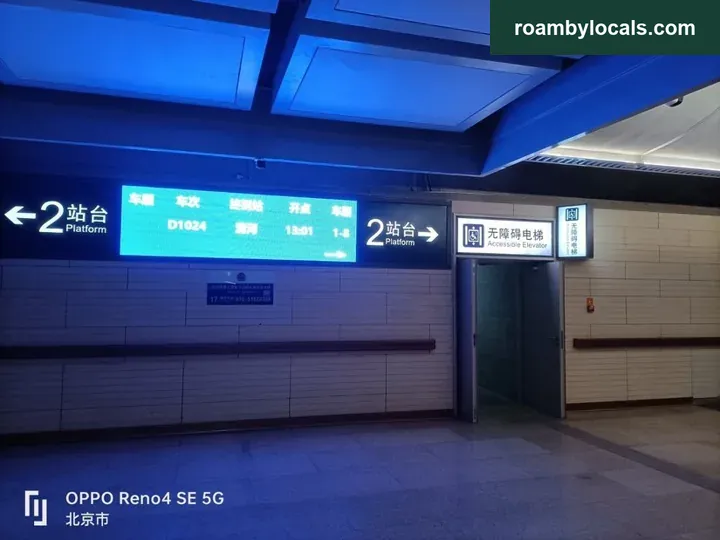
Because the station was a hundred metres underground, boarding for our D1024 train began 20 minutes early. The first escalator after the ticket gate alone took more than 3 minutes.
The train arrived at Badaling on time. We rode to its terminus at Qinghe, then took the metro back to the hotel, completing a major part of our Beijing trip: climbing the Great Wall at Badaling!
Our return tickets.
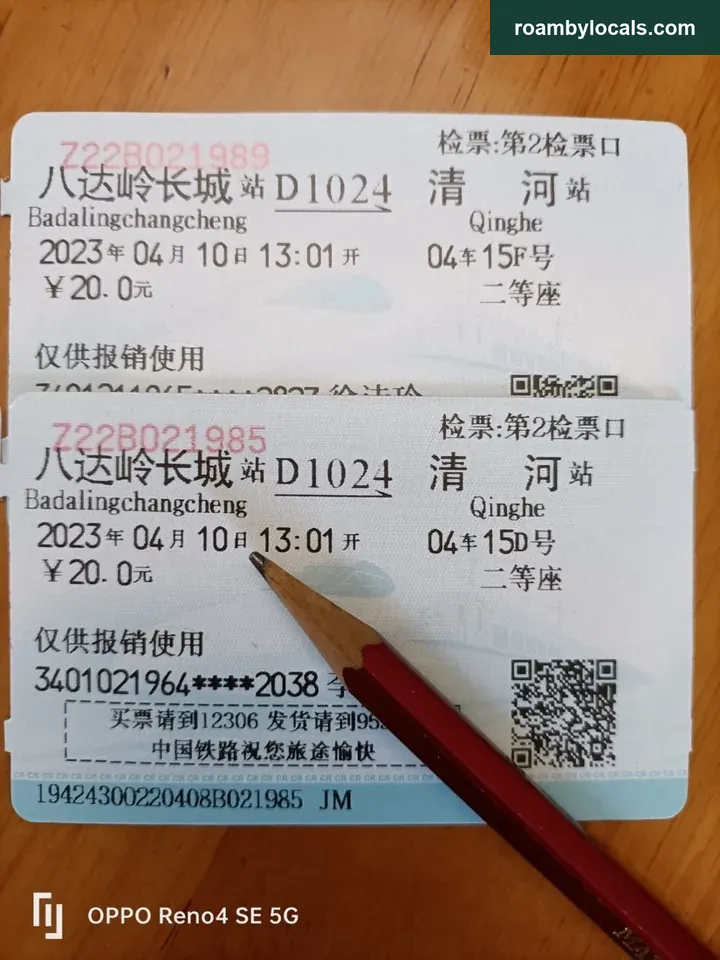
To the platform.
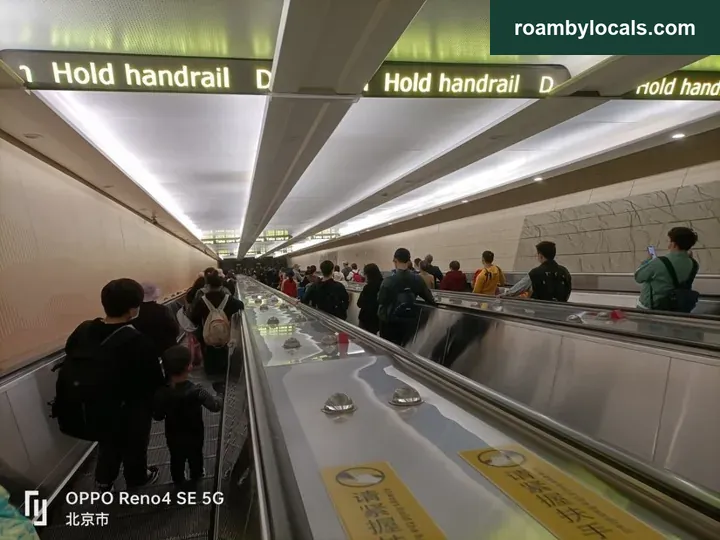
(Author: 575522017)