The three-lake traverse

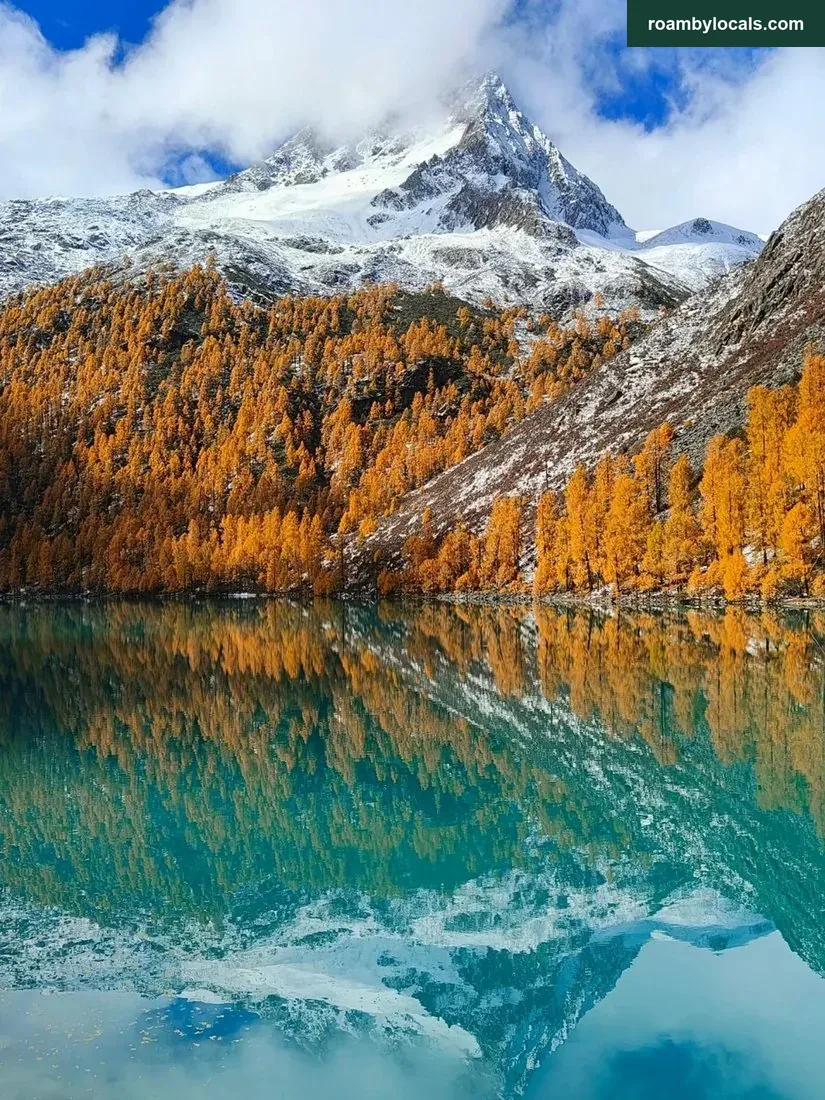
The traverse linking Dangling’s three lakes—Jiayilacuo, Zhuoyongcuo and Huluhai—is a classic advanced high-altitude trek in western Sichuan. The colourful woodland and reflections of snowy peaks in late autumn and early winter are especially beautiful. However, this route demands good fitness, acclimatisation and outdoor experience. Prepare thoroughly before setting out.
Route overview and difficulty
Distance and ascent: about 20-22km in total, with approximately 1000m of cumulative ascent and a highest pass at around 4600m.
Difficulty: high altitude, a long distance and complicated trail conditions; unsuitable for complete beginners.
Best time: mid-to-late October through early November, when the autumn colours peak and the lakes are at their bluest, although the pass may already have snow.
Forward or reverse: the reverse direction is recommended—Ka’erza Village → Jiayilacuo → Zhuoyongcuo → Huluhai → Dangling Village. It is less strenuous overall, and transport connections are more convenient after descending to Huluhai on the final day.
Reverse itinerary: two days and one night
Day 0: Chengdu → Danba County
Travel from Chengdu to Danba County by car or bus, taking about 5-6 hours, then stay overnight and rest. Arriving the night before is recommended for acclimatisation; avoid washing your hair or showering to prevent altitude sickness.
Day 1: Danba County → Ka’erza Village → Jiayilacuo → Zhuoyongcuo (camp)
06:30 Leave Danba. The drive to Ka’erza Village, the trailhead at about 3700m, takes approximately 1.5-2 hours.
08:00 Pay the mountain sanitation fee, about RMB 20 per person. Choose a motorcycle ride, about RMB 160 per person, or walk 5km to Jiayilacuo. Motorcycles stir up dust, so wear a face covering; walkers can use the woodland path alongside to avoid the dust.
10:00 Reach Jiayilacuo, whose water becomes a clear emerald green in the sunshine. Take photographs and rest.
11:00 Begin crossing the pass, climbing 5-6 successive slopes to a high point of 4600m. The surface is mainly a mixture of loose stones, ice and snow, requiring both hands and feet. Be sure to use crampons and trekking poles; keep a steady pace rather than charging ahead.
14:30 Reach Zhuoyongcuo, Dangling’s largest lake. Its deep emerald-green water faces the Xiaqiangla snowy peaks directly.
15:00 Camp beside Zhuoyongcuo or in a nearby flat river valley. Night temperatures are extremely low, so keep warm.
Day 2: Zhuoyongcuo → Huluhai → Dangling Village → return
08:00 Break camp. The 3-4km from Zhuoyongcuo to Huluhai is the most ‘hellish’ descent of the entire trek. It crosses lakeside boulders and rhododendron woodland, with narrow paths, exposed roots and slippery mud. Ankle injuries are a real risk; take extra care.
10:30 Reach Huluhai, Dangling’s best-known alpine landslide-dammed lake. A main lake and a smaller lake join together; in late autumn the golden conifers reflected in the water make wonderful photographs.
11:30 Descend about 6km from Huluhai to Dangling Village. It is all downhill on a farm track: hard on the knees, but relatively easy going. Save energy with a motorcycle ride, about RMB 100-150 per person, or walk down in roughly 2-3 hours.
14:00 Reach Dangling Village and take a chartered vehicle or shared ride back to Danba County, about 2.5 hours. The altitude drops to around 1800m, which can greatly ease altitude-related discomfort, and the accommodation is better.
Equipment suggestions
Clothing: follow a three-layer system—quick-drying, moisture-wicking base layer, warm fleece and a windproof shell. Bring a lightweight down jacket or a lightly quilted down jacket, putting it on immediately when stopping for photographs or when snow falls to prevent hypothermia.
Footwear and walking gear: waterproof, slip-resistant mid- or high-cut hiking boots, already broken in—do not wear new boots—thick wool socks, gaiters, crampons (essential at the pass in late October), two trekking poles and knee supports.
Camping: if camping, a sleeping bag with more than 1000g of down fill is suggested, with a temperature rating around -10℃, together with a high-R-value sleeping mat. Bringing your own sleeping-bag liner is recommended.
Other items: a headlamp in case you are still walking after dark, an insulated flask (hot water is particularly important at altitude), a multifunctional neck tube or face covering against motorcycle dust, sunglasses, sunscreen, a power bank and cash, as mobile reception is poor in the mountains.
Altitude and safety pitfalls
Altitude sickness: Dangling Village and the campsites are all above 3400m. On the first day, avoid strenuous activity, running, jumping, staying up late and alcohol. You can prepare glucose, electrolyte powder and ibuprofen for headaches. If severe altitude symptoms develop, descend immediately; do not try to push through.
Reception and navigation: China Mobile coverage is intermittent throughout, while China Telecom and China Unicom have almost no signal. Download offline tracks in an outdoor app such as Liangbulu in advance. Do not leave the track for unmarked paths.
Sudden weather changes: plateau weather is changeable, and wind and snow often arrive in the afternoon. If the weather turns bad or you run out of strength, abandon Zhuoyongcuo or descend the way you came. Safety always comes first.
Motorcycles: the farm tracks between Ka’erza and Jiayilacuo and between Huluhai and Dangling Village offer motorcycle rides to save energy. Join the queue early so a long wait does not disrupt your itinerary.
Leave no trace: considerable rubbish has previously been found around Zhuoyongcuo and the pass. Bring rubbish bags and carry every piece of your waste out of the mountains to protect this relatively undeveloped place.
Advice for beginners
If this is your first high-altitude trek or your fitness is only average, the three-lake traverse is strongly discouraged. Choose an easier out-and-back alternative: on the first day, go from Dangling Village to Jiayilacuo and back to acclimatise; on the second day, take a motorcycle from Dangling Village to visit Huluhai and return the same way. This lets you see the main scenery while keeping safe. (Author: 九华月)