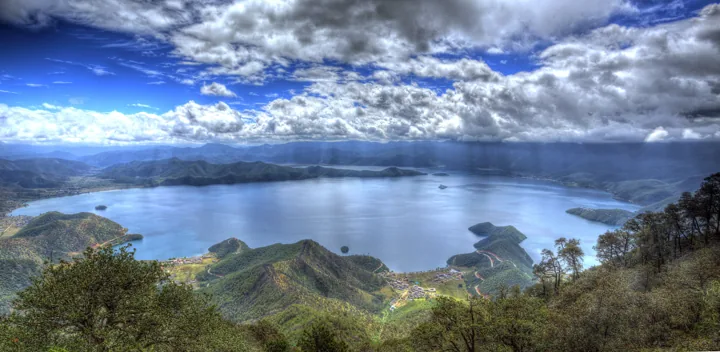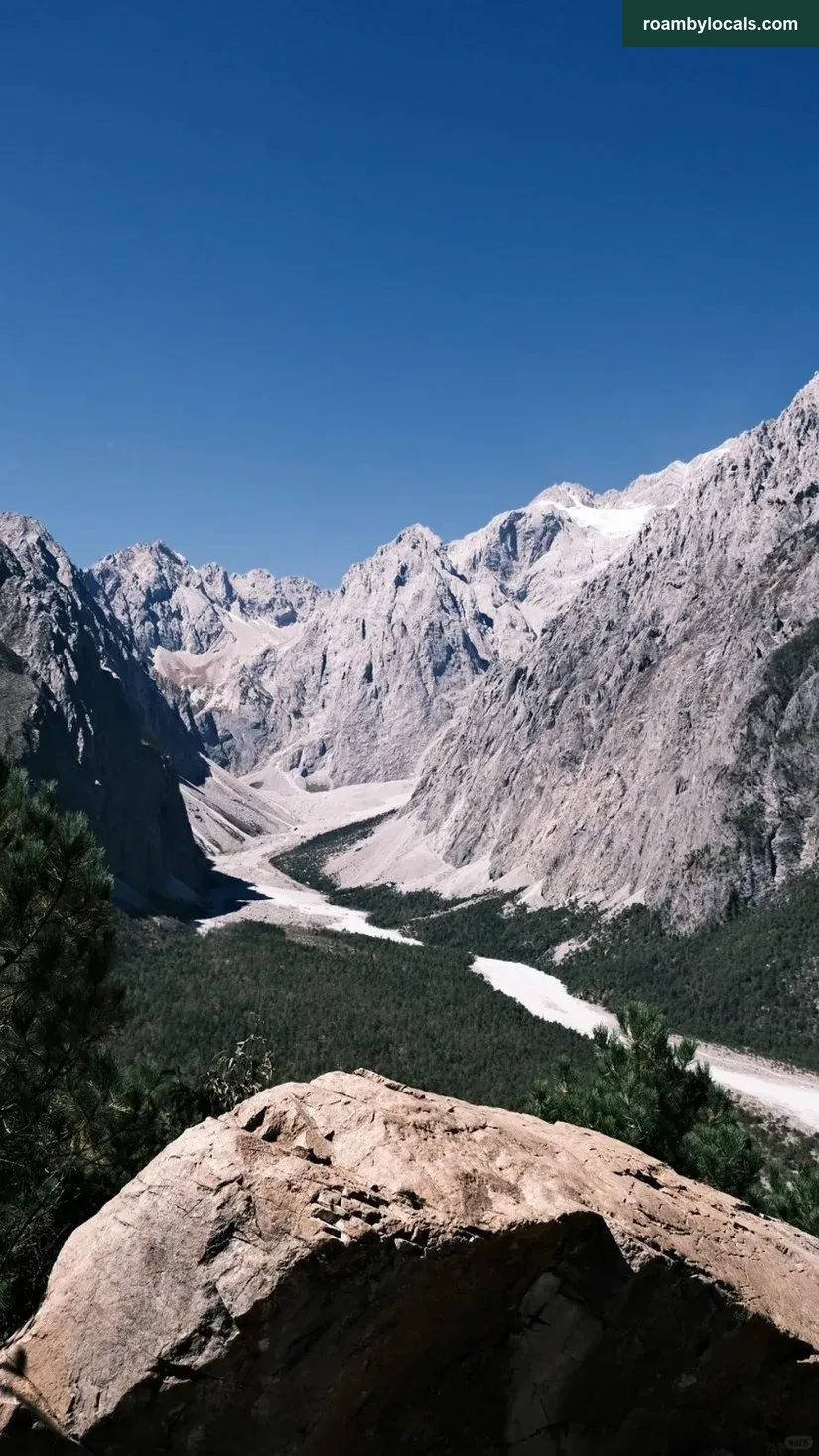
The Ganheba valley route
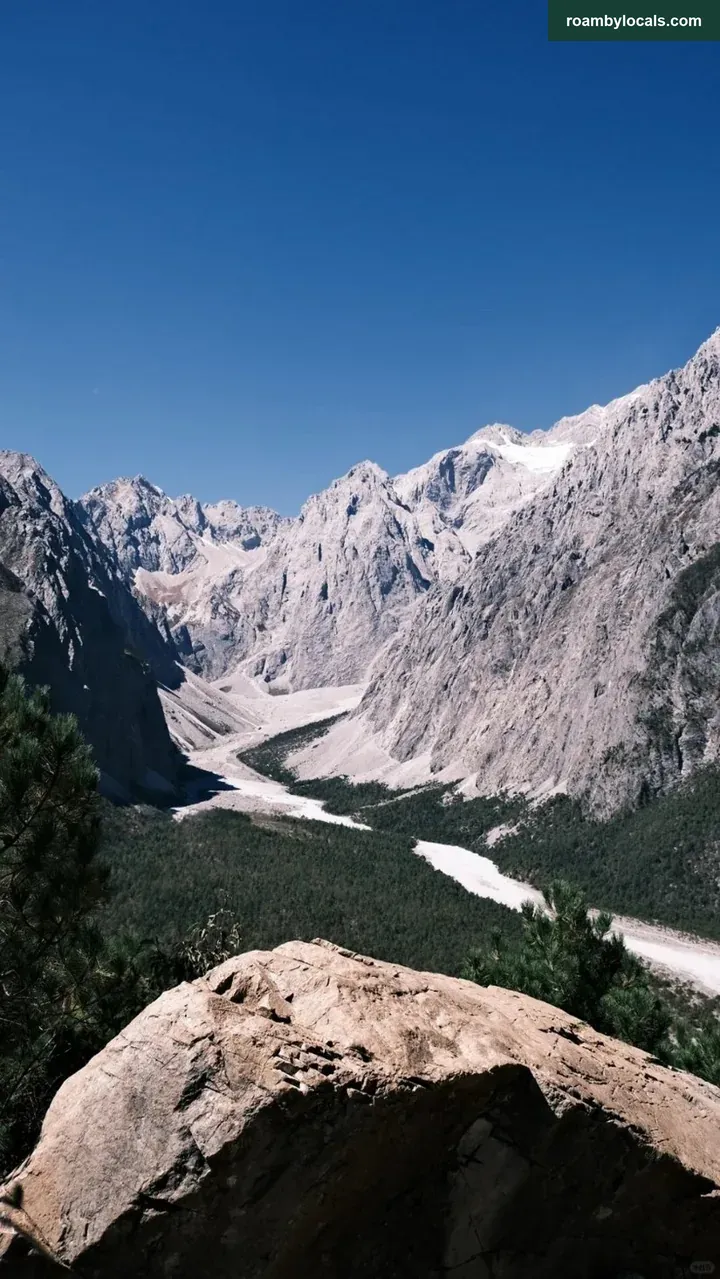
Ganheba lies at the foot of Yulong Snow Mountain in Lijiang, Yunnan. This beautiful hiking route brings together snowy peaks, meadows, a canyon and Milk Lake. Compared with the ridge route, the valley route is friendlier to beginners, with gentler climbing and fewer leeches, making it a first choice for experiencing this hidden snowy-mountain landscape.
Basic route information
Total distance: about 10km, or about 8km if turning back at Milk Lake, and about 13km if detouring to Luoke Rock.
Ascent: approximately 400m, reaching a maximum altitude of around 3400m.
Walking time: about 3.5 - 5 hours, including photography and rest stops.
Difficulty: beginner-friendly, with mainly gentle slopes throughout.
Route characteristics: follow the valley floor on mostly dirt paths and meadows, without steep scree slopes. The main sights include Yulong Snow Mountain, Milk Lake and Luoke Rock.
Detailed walking itinerary
Start: Longnü Lake in Yuhu Village. Navigate to ‘Yuhu Village Longnü Lake Base Camp’, at about 2700m. From the visitor centre, take a sightseeing vehicle to the start, about RMB 30 per person, or walk 3km in.
First part: pine forest and meadows. Leave Longnü Lake and climb gradually through pine woodland and riverside meadows. Open views stretch towards Lijiang and the snowy peaks. The path is in relatively good condition and makes a suitable warm-up.
Middle part: Ganheba and Milk Lake. Emerging from the trees, enter the broad Ganheba riverbed plain and then reach Milk Lake, the main photo stop. The lake is a seasonal calcium-carbonate depression in a U-shaped valley. It is dry and walkable in the dry season, turning Tiffany blue during the rainy season.
Final part: Luoke Rock and the return. Continue beyond Milk Lake to Luoke Rock, which involves some climbing and overlooks the snowy mountain canyon. Then return to the start along the grassy valley floor, or descend from Milk Lake to the Ganhaizi road and leave by taxi.
Transport and mountain access
Driving or taxi: from Lijiang Old Town or Baisha Old Town, the journey takes about 40-50 minutes. Note that private vehicles cannot enter Yuhu Village’s internal roads between 8 a.m. and 6 p.m. Arrive before 8 a.m. to drive directly to the free Longnü Lake car park; after 8 a.m., change to a shuttle at Yuhu Village Visitor Centre or walk 3km in.
Public transport: take a bus to Yuhu Village, then walk 1.5km from the stop to Longnü Lake Base Camp.
Access rules: Ganheba is currently subject to risk-control restrictions. Visitors generally need to register at Longnü Lake Base Camp and pay a sanitation management fee of around RMB 65 per person. A local guide is required at certain times, with shared groups possible. Confirm the latest policy beforehand through an outdoor platform or a local guesthouse.
Essential equipment and supplies
Clothing: quick-drying clothes plus a windproof shell or light fleece jacket. The valley is windy and cold. Long trousers tucked into socks are recommended against leeches.
Footwear: high-cut, slip-resistant hiking boots to protect ankles on the many riverbed and stony sections.
Equipment: trekking poles to save effort and reduce slipping, knee supports, sunglasses, a sun hat, SPF50+ sunscreen and a raincoat for the plateau’s changeable weather.
Supplies: there are no supply points along the route. Bring more than 2L of drinking water and high-energy snacks such as chocolate, energy bars and beef jerky.
Emergency items: a power bank, a torch in case you finish after dark, strong salt water or alcohol wipes against leeches, and glucose to prevent altitude sickness.
Pitfalls and safety tips
Leeches: although the valley route has fewer than the ridge route, you may still encounter them during the rainy season, June–September. Bring leech repellent and secure your trouser cuffs. Do not pull attached leeches off by force; salt water, alcohol or soapy water can make them detach, after which the wound should be disinfected.
Download a track: mobile reception in the mountains is poor and there are many junctions. Download an offline track in Liangbulu or Liuzhijiao beforehand and follow it to avoid getting lost.
Altitude sickness: the highest point is about 3400m, where some people may experience mild symptoms. Rest well beforehand, walk steadily rather than running, and consider bringing a cylinder of oxygen or glucose.
Weather: the best hiking season is October through May of the following year, the dry season, when the white riverbed is prominent and sunny days favour photography. During the rainy season, June–September, the route is slippery and muddy with more leeches, and is not recommended for beginners.
Go with others: beginners without outdoor experience should hire a guide or go with a group. Do not attempt undeveloped trails alone. (Author: 九华月)