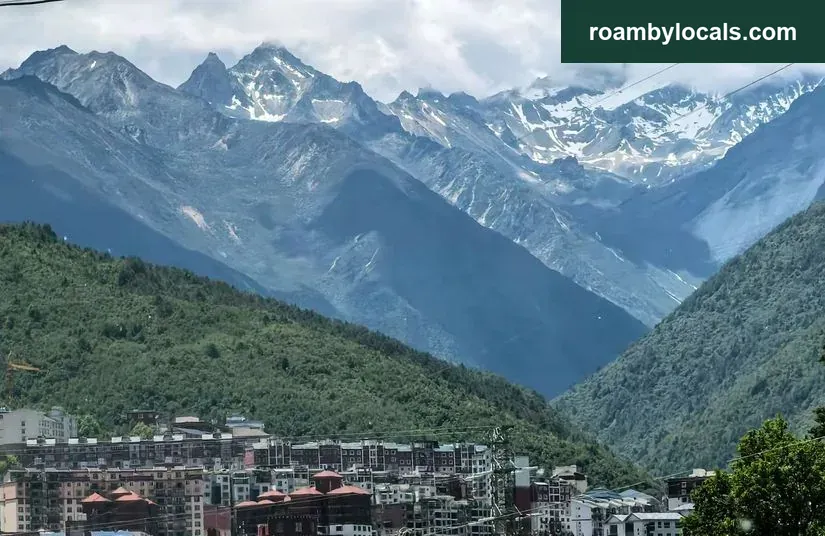
An itinerary idea, ready to adapt to your pace and travel arrangements.
The first chapter of a summer road trip
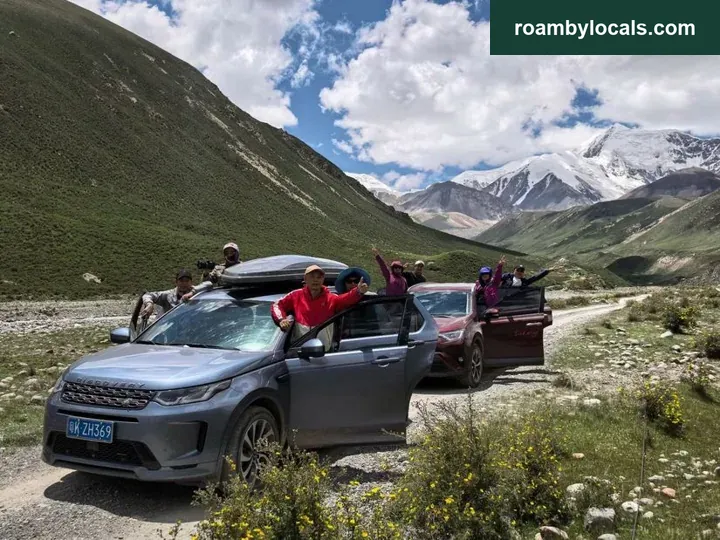
Our summer 2025 self-drive journey through western Sichuan and Gannan brought together eight outdoor friends in two cars for 20 days: ten nights camping and nine in hotels or guesthouses, over 7400 kilometres through Guangxi, Guizhou, Sichuan, Qinghai, Gansu, Shaanxi and Chongqing. We saw four great snowy mountains — Gongga, Yala, Siguniang and Amnye Machen — camped on the five grasslands of Tagong, Hongyuan, Qinghai, Sangke and Ruoergai, explored Mosika and Lianbaoyeze in western Sichuan and Zhagana in Gannan, and drove the popular Lixiao Road, Rock’s Road, Gannan’s Little Duku and Jiuhong Grassland Scenic Road. We visited two Tibetan villages, three old towns and two ancient battlefields… It was rich and varied. Better still, we did not follow the original plan rigidly: free, relaxed and flexible, meeting helpful people and finding surprises almost daily. Besides camping, sightseeing and exploration, we cycled around lakes and walked through gorges and grasslands. I think it was our most perfect road trip in recent years. As usual, I will make ten illustrated essays as a keepsake and to share with friends. This is the first.
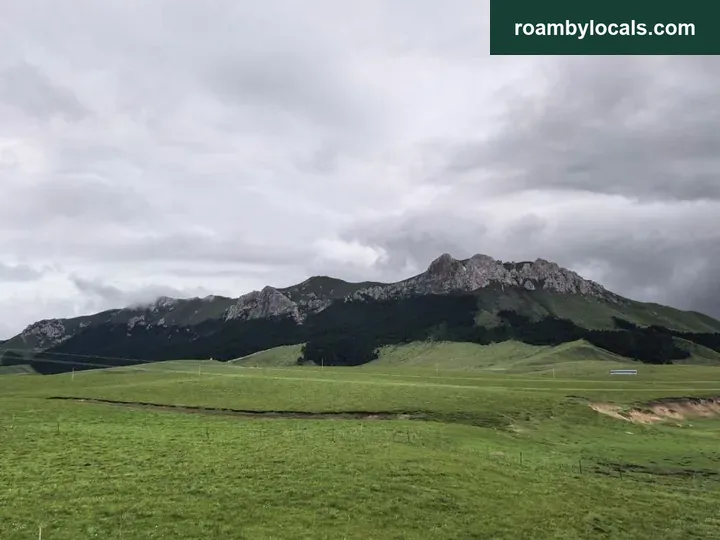
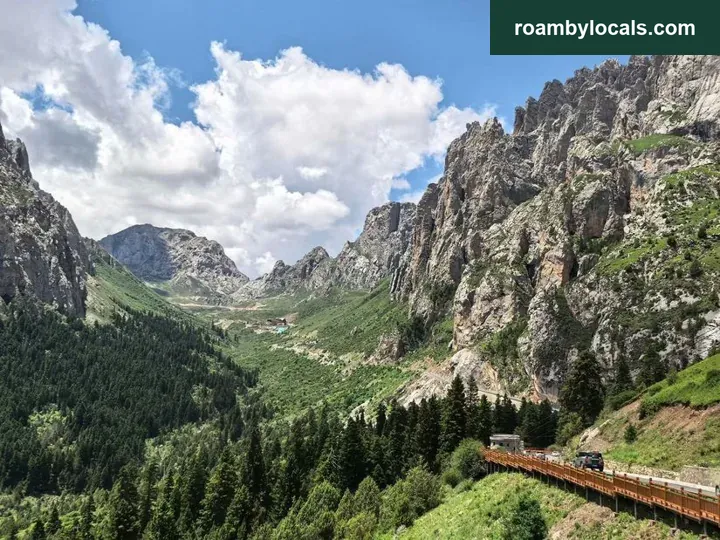
Where shall we drive this year?
On the evening of 11 June at Diancheng’s Poly Metropolis Seafront Park, a full moon rose in the southern sky, round and large. After ten it was still low to the south, exceptionally bright. According to information online, it was the year’s lowest full moon, coinciding with the sixteenth day of the fifth lunar month.
Beneath that low moon, our Suixinxing outdoor group gathered for tea on the park lawn, talking about outdoor adventures and camping. Our group’s elder sister suddenly asked: summer holidays are nearly here; any road-trip plans, and where? Without hesitation I answered: of course — western Sichuan and Gannan.
In fact it was only an idea; I had not researched a guide. Besides scenery, we wanted cooler weather and camping. The very next day she asked for the plan: her family and friends wanted to join.
I had to start planning. Only around twenty days remained before the holiday anyway. I thought it would be easy with DeepSeek: enter the dates and destinations and a guide appears. Several conversations later, none was satisfactory. It seemed I would have to do it myself.
Over four days, I read dozens of guides, watched dozens of videos and used Amap to calculate distances. At last I had a twenty-day western Sichuan–Gannan driving plan. By then, only half a month remained before the holiday.
The response was good: six friends signed up within a week. With Teacher Ma and me, eight people and two cars — just right.
Leaving on the agreed date
With the group assembled, we set up a chat, allocated tasks and planned departure and supplies.
Initially, departure was 5 in the afternoon on 6 July. Two reasons: our group organiser’s kindergarten broke up on 3 July, leaving two days for accounts and staff-holiday arrangements; and on the morning of 6 July, Uncle Huimou and the elder Wu Zhaoqi were launching their new book, The Little Town of Shendianwei, which I needed to attend.
The date was fixed, money collected and supplies bought when something changed: Uncle Huimou’s launch was postponed by a week for special reasons. What now? I agonised for a day and asked each companion. Some could not travel later. I had to ask Uncle Huimou to excuse me, regrettably missing the book launch.
We left on 6 July as planned. Without the morning launch, our evening departure moved forward to the morning. We gathered at Diancheng’s gas depot at 9, and the wheels rolled at 9:58. Off towards happiness!
A service-area campsite to remember
Along Jingang Avenue, onto Maoming Port Expressway, then Shenhai and Lanhai expressways… all the way towards Chengdu. From half past nine that evening we looked for a service area to camp, our established practice on previous road trips.
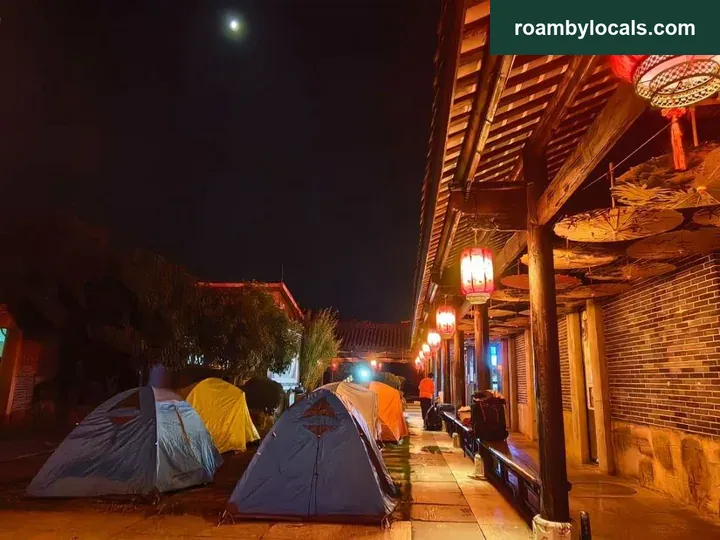
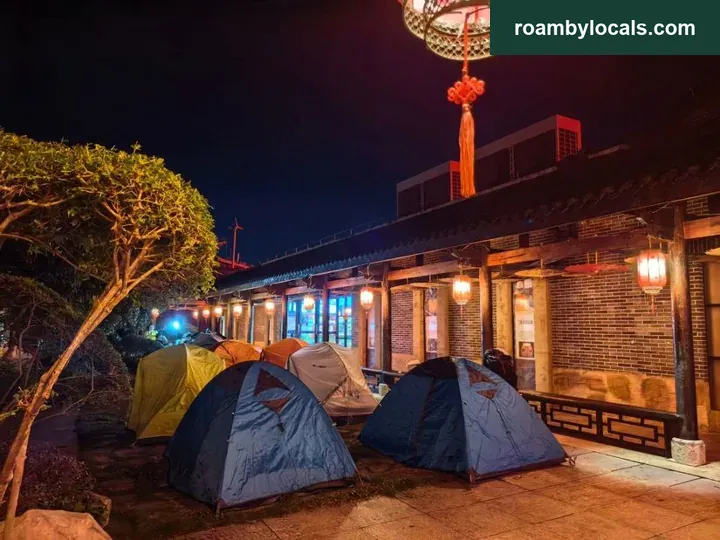
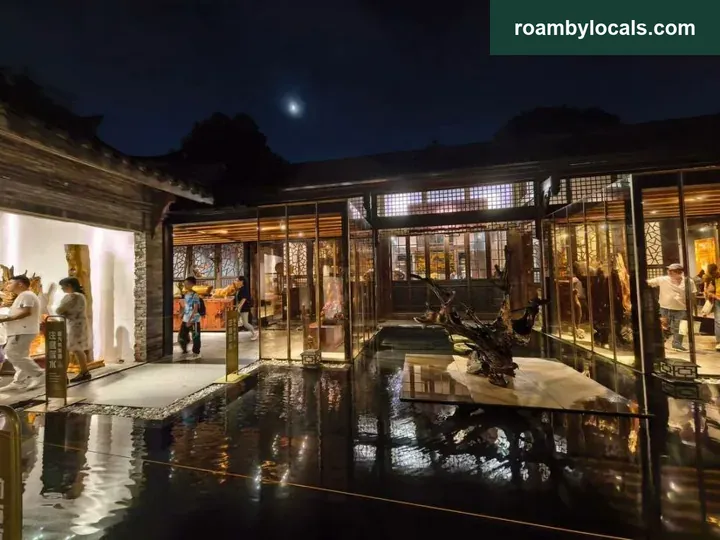
Usually we inspect several before finding one we like; tonight the first one suited us. It was small: shops outside, toilets inside, with a buffer between them. Covered galleries and passages enclosed a long courtyard with over a hundred square metres of lawn, just right for a few tents.
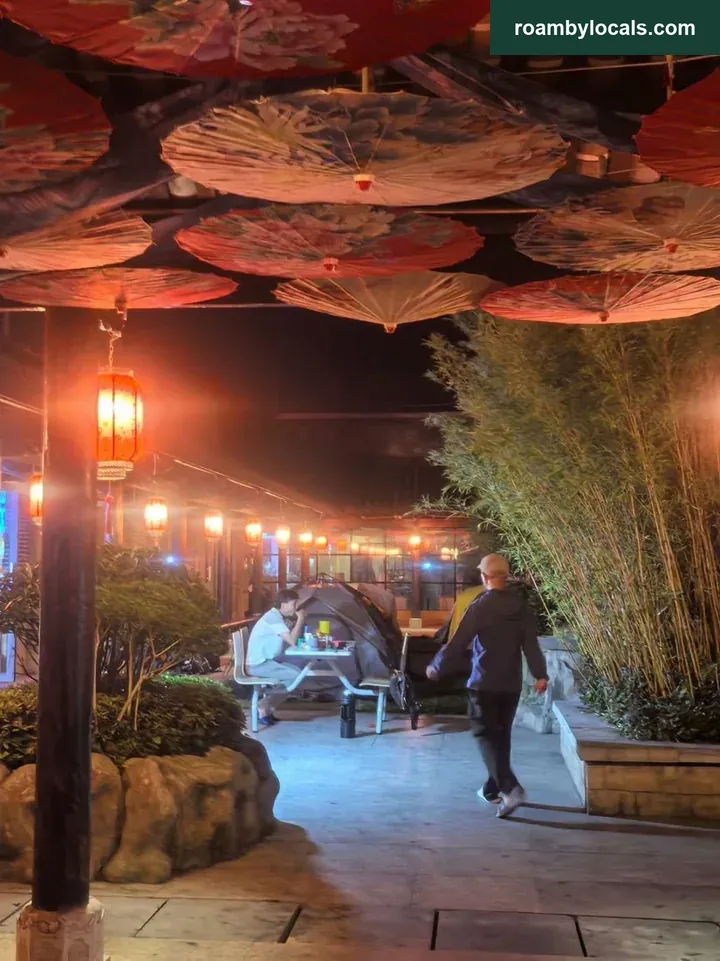
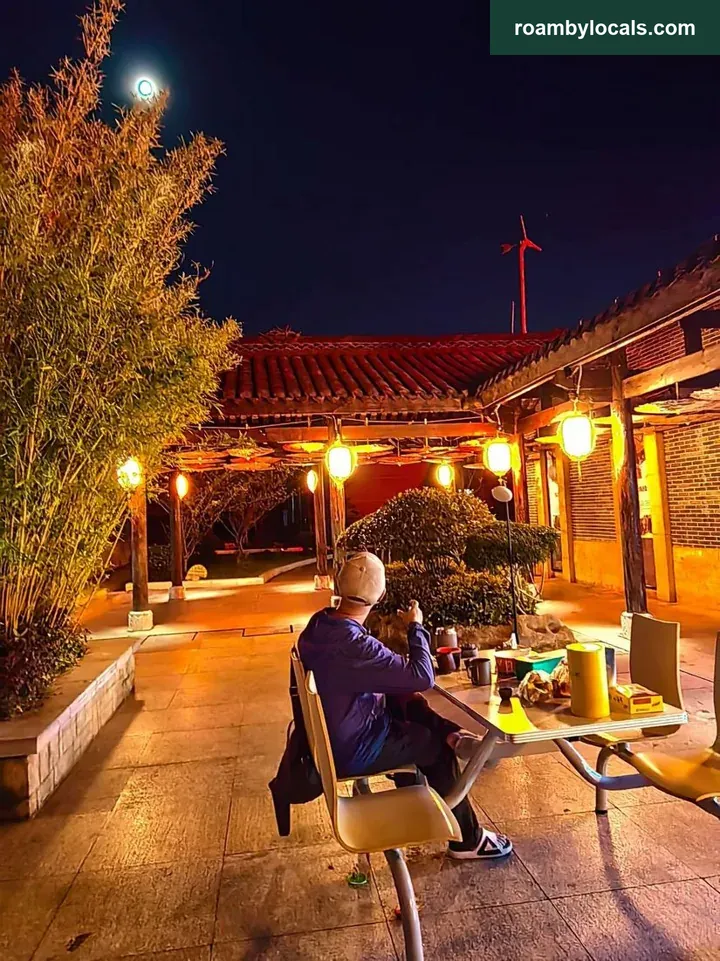
After pitching, we brought a table from the shop for tea and conversation, then examined our little camping courtyard. Opposite stood a screen wall with a carved stone panel of flowers and birds, a clump of bamboo nearby, and potted plants across a path two metres away. Lanterns and oiled-paper umbrellas hung from the covered passages; in their light the umbrellas had an old-fashioned Jiangnan charm. It was clearly thoughtfully made. The place was elegant and clean, and the staff were excellent: no trouble, occasional gentle greetings, very polite.
As we chatted over tea, a bright moon had risen above the courtyard, framing the screen wall, bamboo, lanterns and umbrellas: elegant, welcoming and faintly poetic. After the others went into their tents, I sat alone for a while longer.
Early next morning, walking around the car park, I noticed the entrance gate was also small and elegant. Wooden columns bore a long couplet: on the left, ‘The finest expressways benefit the Southwest’s countless mountains and rivers’; on the right, ‘Colourful Guizhou, renowned throughout China, astounding past and present’. Above the gate: Yiranting.
A service area that thinks about its guests will be remembered. We remembered its name, Huishui, and voted it the most beautiful service-area campsite encountered on our road trips.
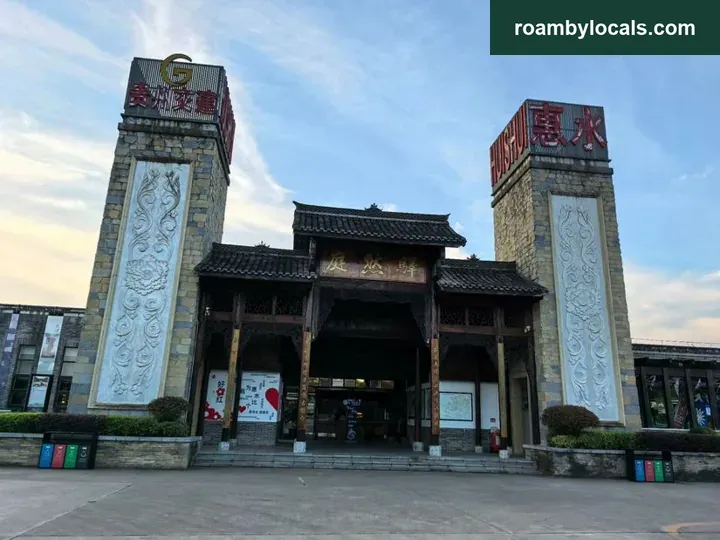
Chengdu again
Chengdu again, this time in the afternoon.
It was my third visit. The first was in 2018, assembling for my first Tibet trip. I stayed a day and two nights, visited Kuanzhai Alleys and Jinli, ate local hotpot and called on a friend working there. The second was in 2019, with a group of political consultative conference members studying tourism. Besides Kuanzhai Alleys and Jinli, we visited Wuhou Shrine and Du Fu’s Thatched Cottage.
This time I deliberately chose a place near Chunxi Road. After dinner, we explored it. In June 2023, a state-owned enterprise boss’s hand-holding scandal made the street a household name online. That August, returning from a Xinjiang drive, I had hoped to stop here but ran out of time. This time I could not miss it.
Chunxi Road is a central Chengdu shopping district: modern buildings, towers, broad streets, shops and dense crowds. With the lights on, neon and glitter made it still more bustling. Walking, browsing, photographs and shopping malls quickly filled three hours. Friends filmed Teacher Ma and me holding hands on a Chengdu street, set to Zhao Lei’s Chengdu: wonderfully fitting, a little greeting gift from Chunxi Road. Thank you.
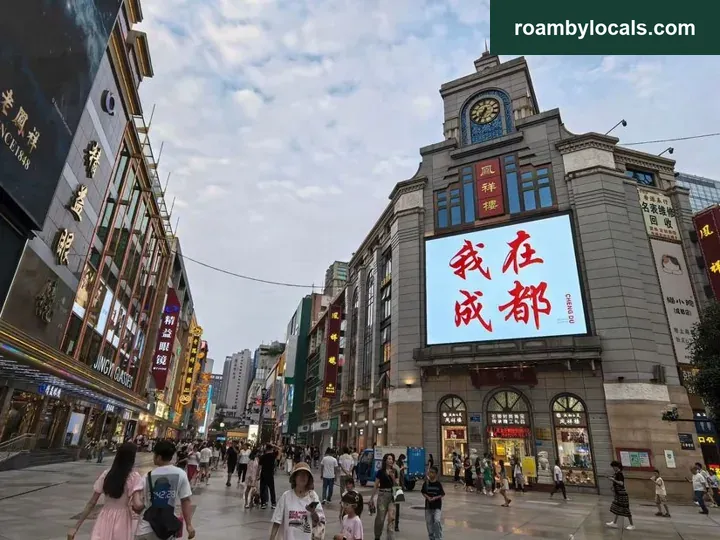
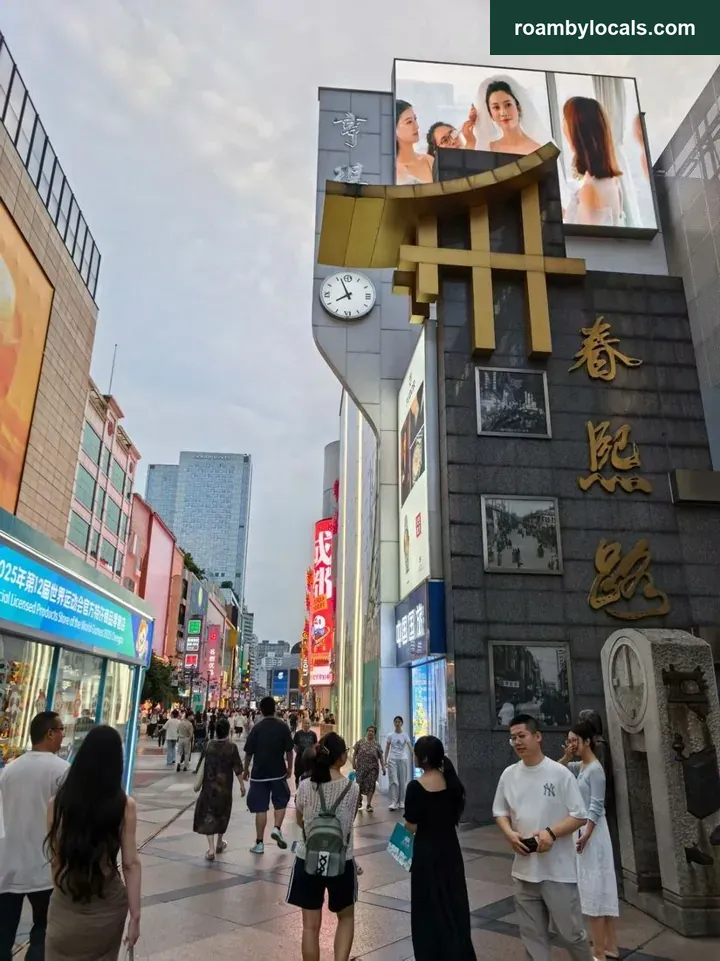
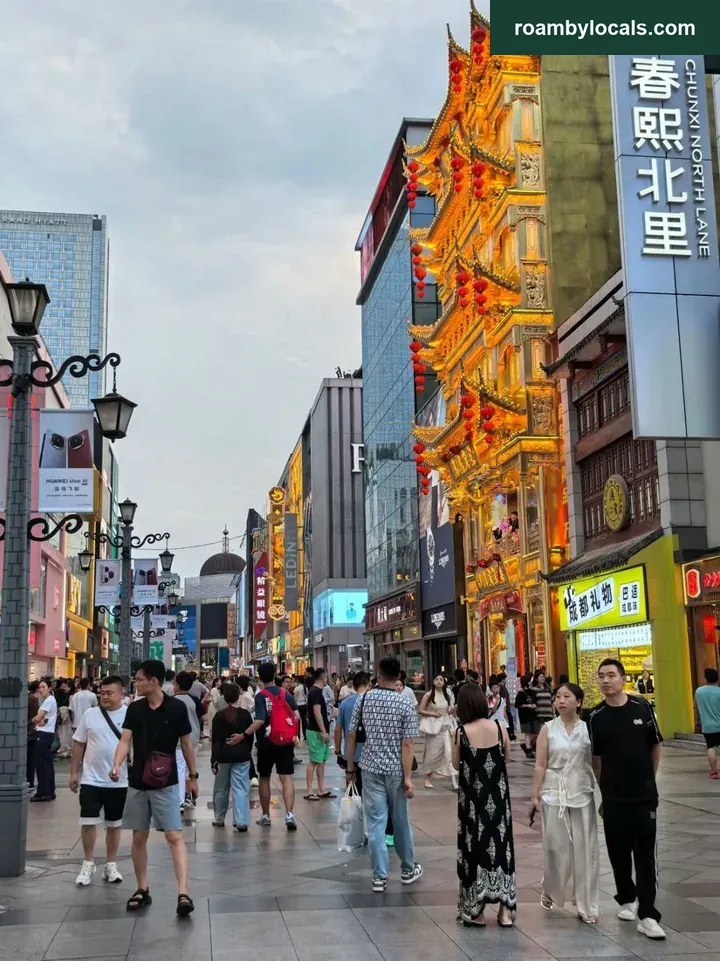
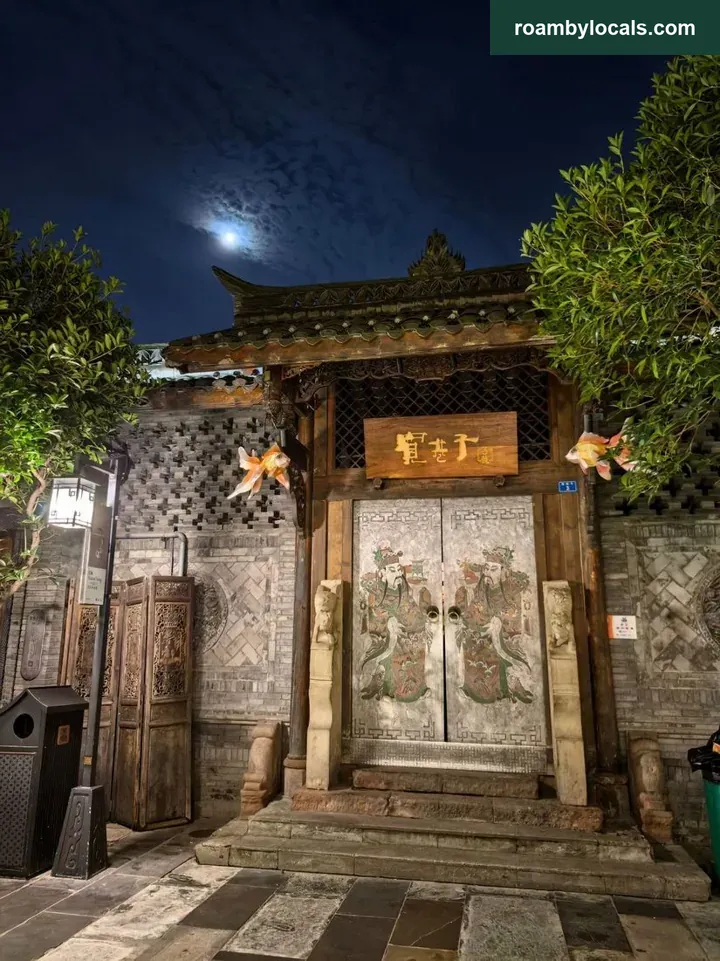
Kuanzhai Alleys by night
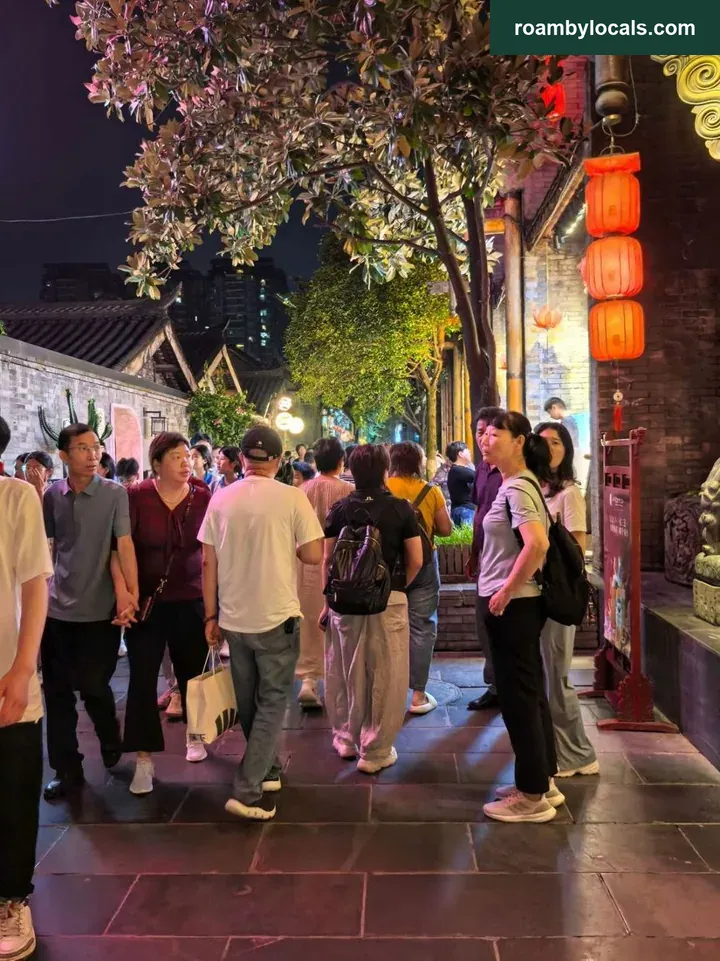
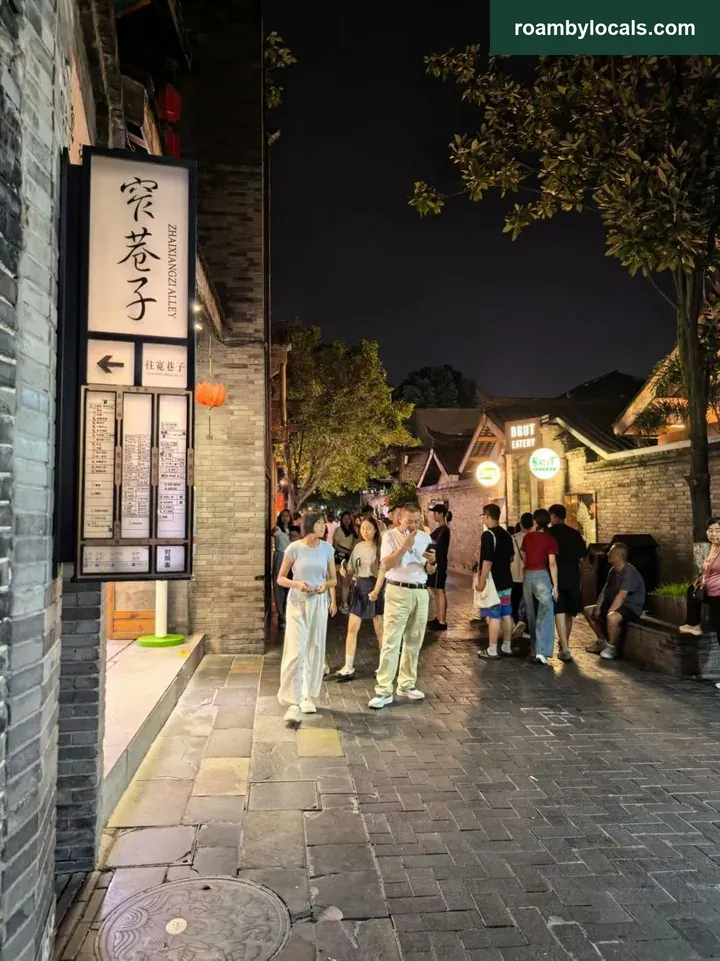
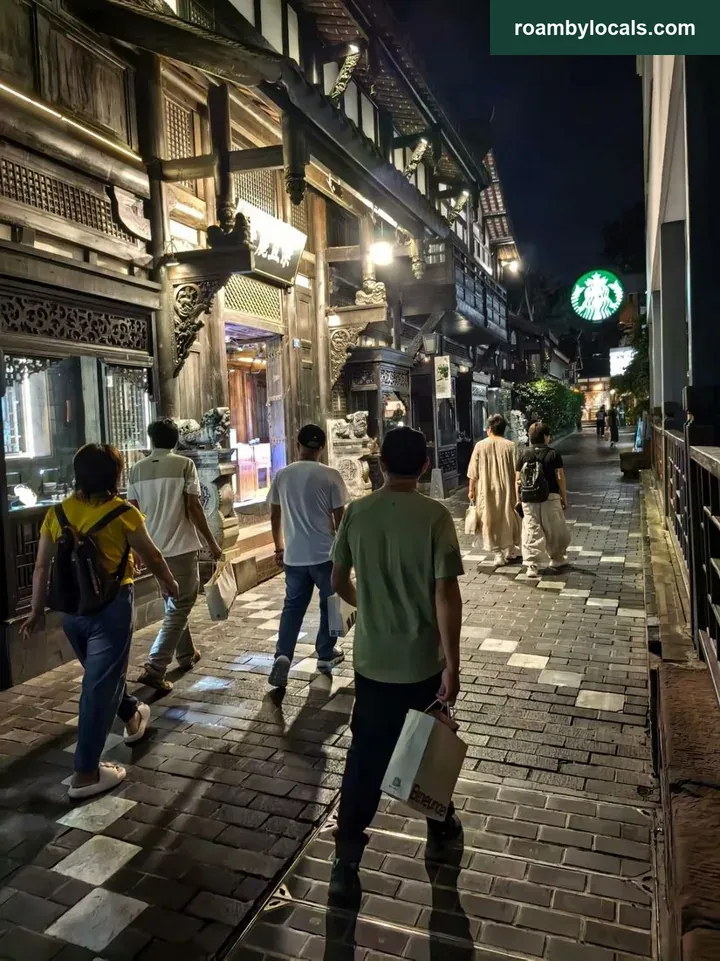
It was already nine at night when we left Chunxi Road, but everyone still wanted Kuanzhai Alleys. Some were first-time visitors; of course we should fulfil that wish. A taxi cost a little over ten yuan and took a few minutes — not far.
My third night visit. Even after nine the alleys were crowded and lively. Hai-ge and I had agreed to find a teahouse, drink tea and listen to opera. Several places offered only face-changing performances, so we gave up.
On the previous visit Hai-ge and I had tried the heritage snack Sanxiangpao, so I introduced it to our companions. Tasting was secondary; the preparation performance was the attraction. After three dazzling ‘dong-dong-dong’ sounds, three brown-sugar-coated glutinous-rice balls bounced into a cup. Everyone thought they tasted far worse than our local sugar-centred rice cakes: the performance alone caught the eye.
Passing an ear-cleaning shop, I could not resist another session. I seem to try it every visit: twenty yuan, ten minutes, short but enjoyable. Ear-cleaning is a leisure activity, and Chengdu people perfect such pastimes. No wonder the city is called the capital of leisure.
Route 318 again
Route 318 again, this time between Chengdu and Xiandu Bridge.
On my first Tibet journey we went to Yingxiu, Danba, Jinchuan, Seda, Garze and Dege along Route 317, only joining 318 at Markam, missing this stretch. The second time we entered from Shangri-La in Yunnan along 214, again reaching 318 at Markam. Only on the return did we cover Markam–Chengdu, but at Kangding we left 318 for Su Dongpo’s hometown, Meizhou, missing Kangding–Chengdu again.
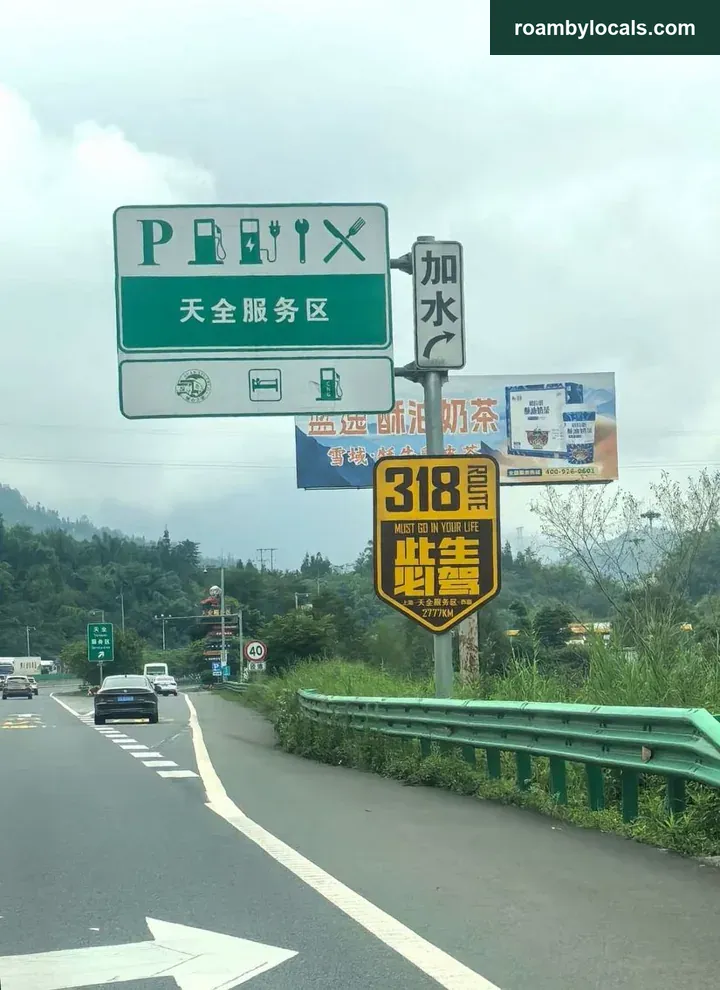
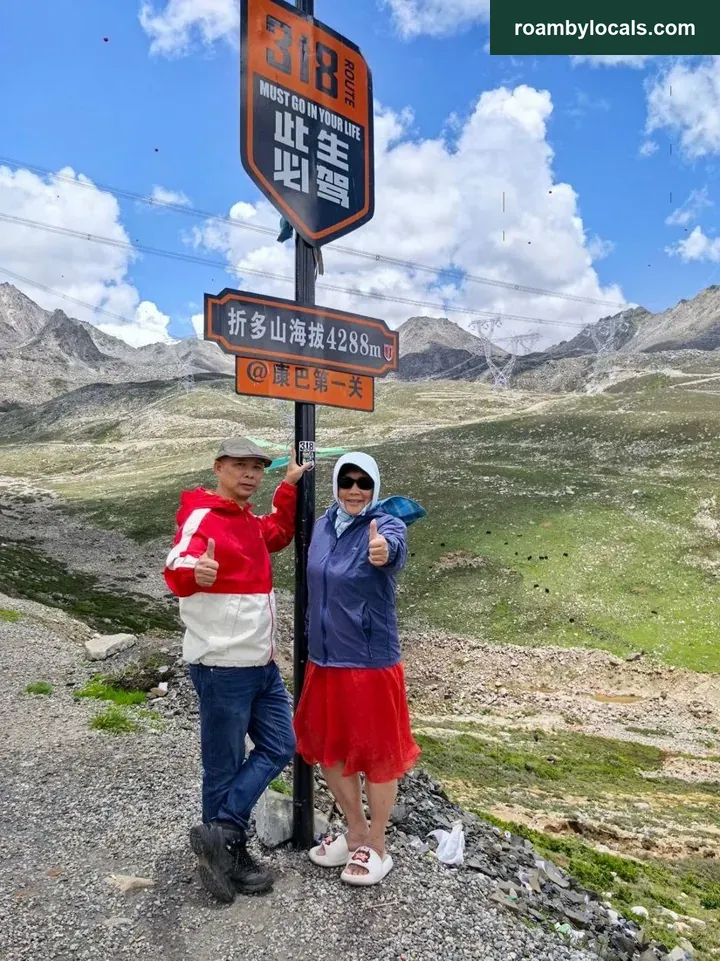
Though my third time on 318, Chengdu–Kangding was new to me and, of course, my companions. Route 318 is a dream road for many outdoor travellers. As signs for 318 and ‘Drive 318 in this lifetime’ flashed past, Hai-ge and Weizheng became especially excited, asking me to slow down so they could take photographs to share with family.
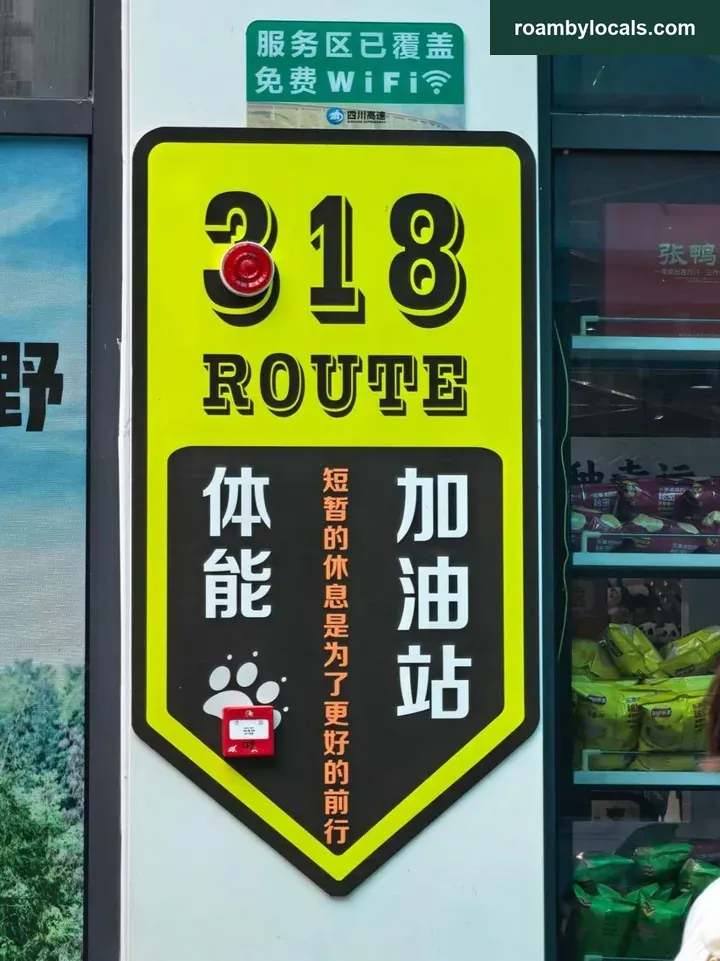
The first service area after Chengdu was covered in 318 references: ‘318 Energy Refuelling Station’, ‘Dianxing 318 Off-road Park’ and more. Off-roaders, SUVs and ordinary cars alike mostly displayed ‘Drive 318 in this lifetime’ on their rear windows. Hai-ge was itching to go: how far from here to Tibet? I laughed: is Hai-ge thinking of entering Tibet?
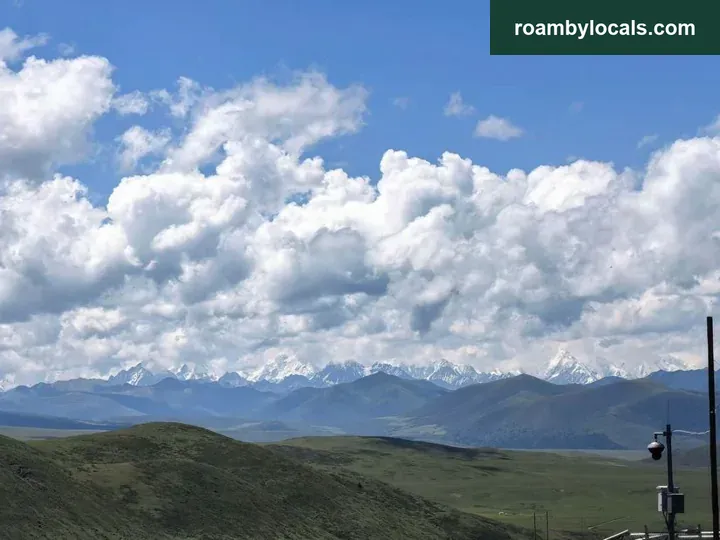
Gongga comes into view
Gongga was the first snowy mountain we saw on this trip.
Entering Kangding, a distant snowy mountain appeared to the right of the road ahead, just one or two peaks or a side profile. That alone thrilled and drew us in. Hai-ge, in the front passenger seat, officially switched to photography mode.
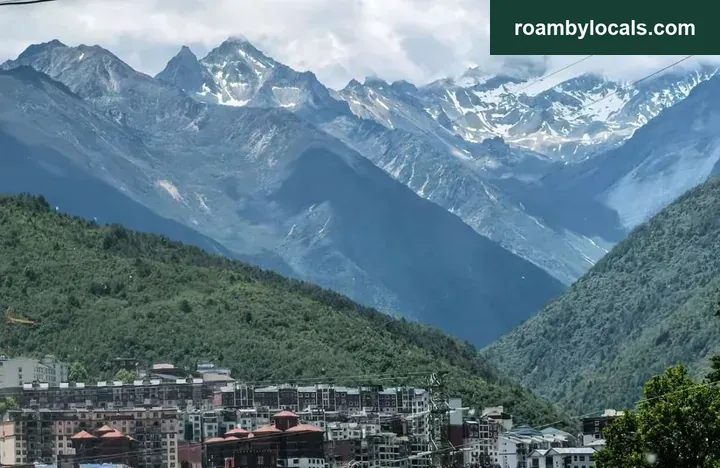
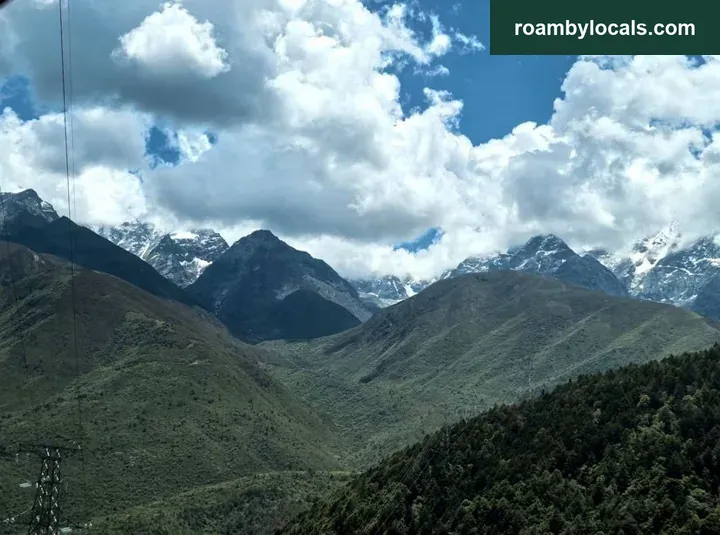
Of course it was Gongga. For dozens of kilometres it barely left our view: ahead, alongside or in the rear-view mirror. When it disappeared, it was only briefly. Called the ‘King of Sichuan’s Mountains’, Gongga is spectacular and extensive.
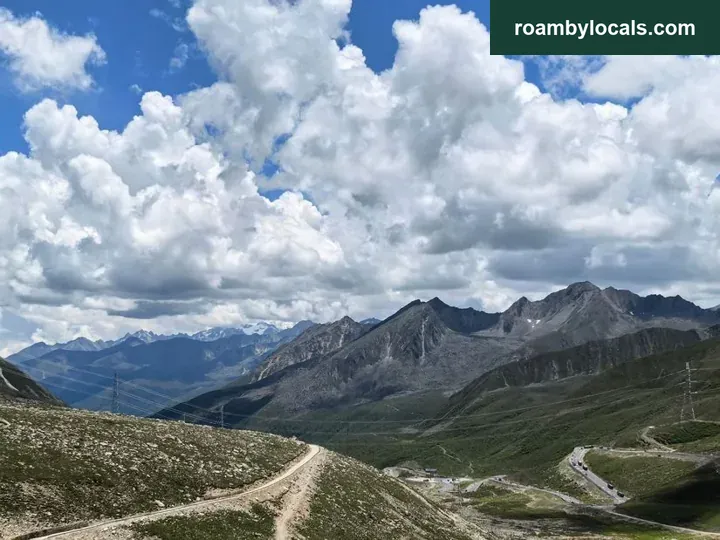
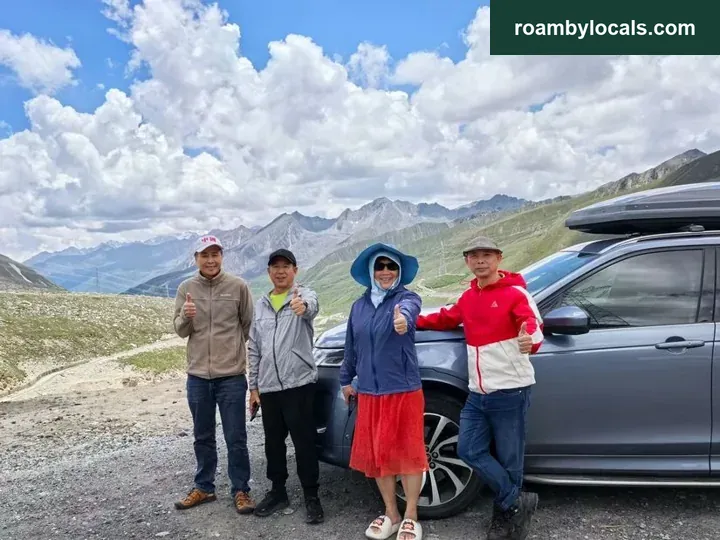
As we entered Zheduo Mountain and gained height, more and more of Gongga appeared, broader and more astonishing. We stopped at parking places to admire and photograph it. At another parking place near the summit pass, elevation 4288 metres, I began to feel mild altitude sickness. Hai-ge and Weizheng, on their first plateau visit, seemed unaffected. Perhaps excitement at Gongga made them overlook it.
In fact, tonight’s campsite was chosen for Gongga: Jiagenba, a place I had seen online countless times, where we could camp with a view of the mountain. Would it bring us a surprise tonight?

(Author: 香炉号)