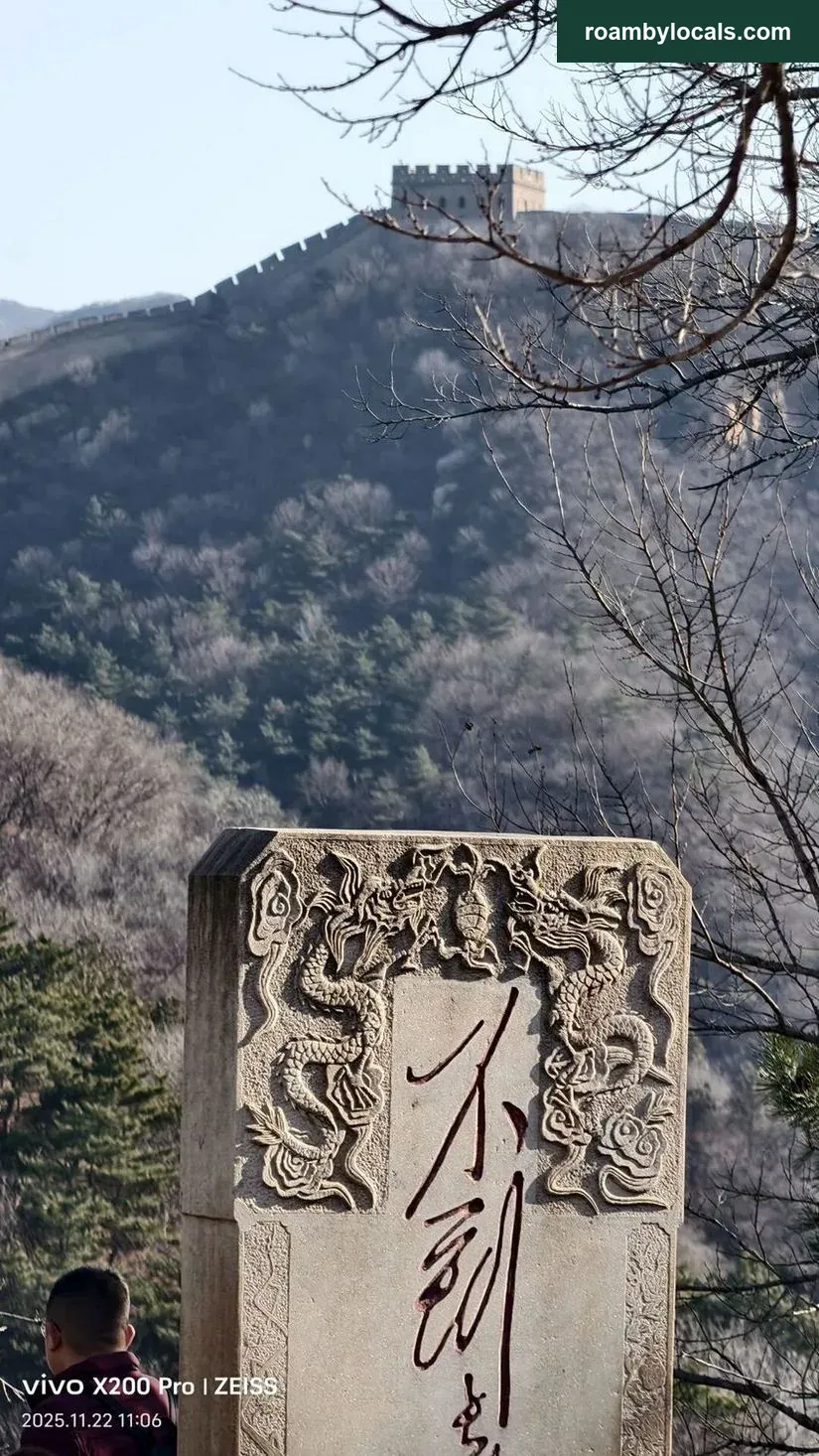
Getting to Badaling
You are no hero until you have climbed the Great Wall.
This Saturday, I made the most of the fine weather between autumn and winter to carry out an outdoor plan I had been considering for ages.
This time I went by bus. Coming out of Beitucheng metro station, I took bus 877 directly there, without an intermediate stop.
The fare was friendly too: 12 yuan per person, half price with a Beijing–Tianjin–Hebei transport card.
On Saturday they used large coaches, departing as soon as they filled up. There was no need to worry about waiting; we joined the long queue to board.
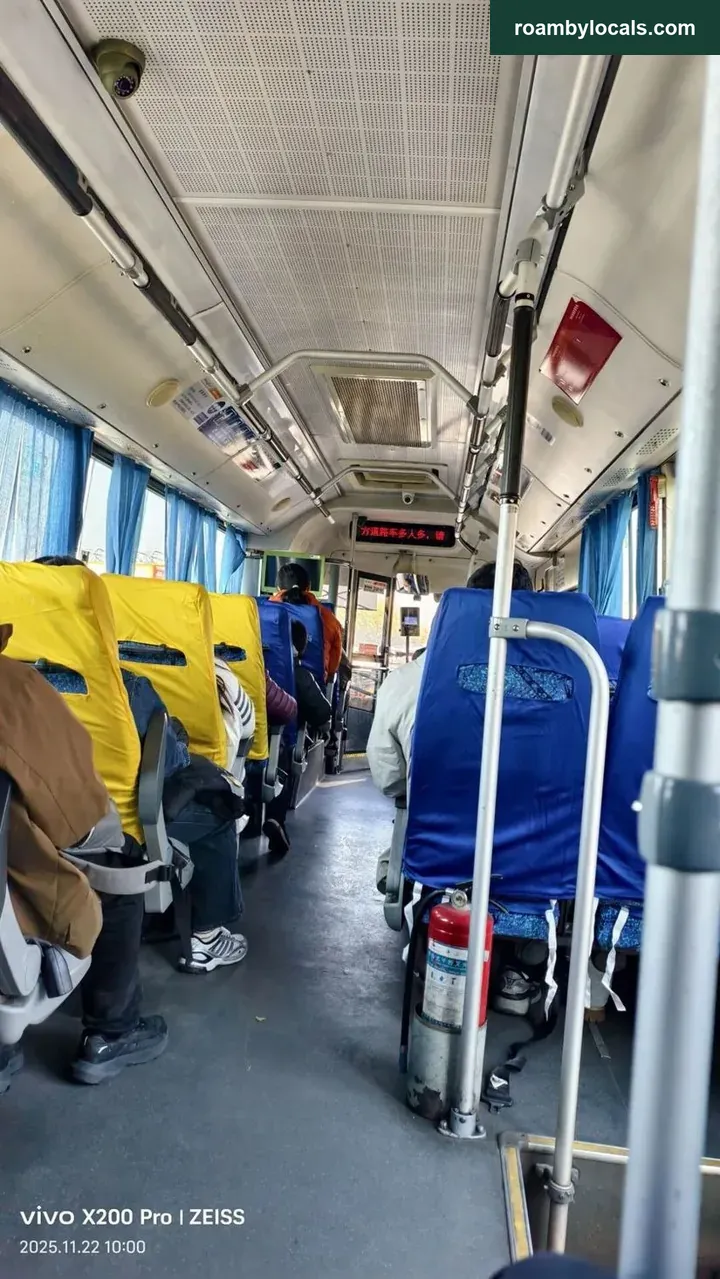
After about an hour and 40 minutes, we reached the foot of the Great Wall at Badaling.
After we got off, staff led us to the entrance for climbing the wall. Here you could choose the northern or southern route.
The northern route had more scenery and cultural sights, and was generally the one people chose.
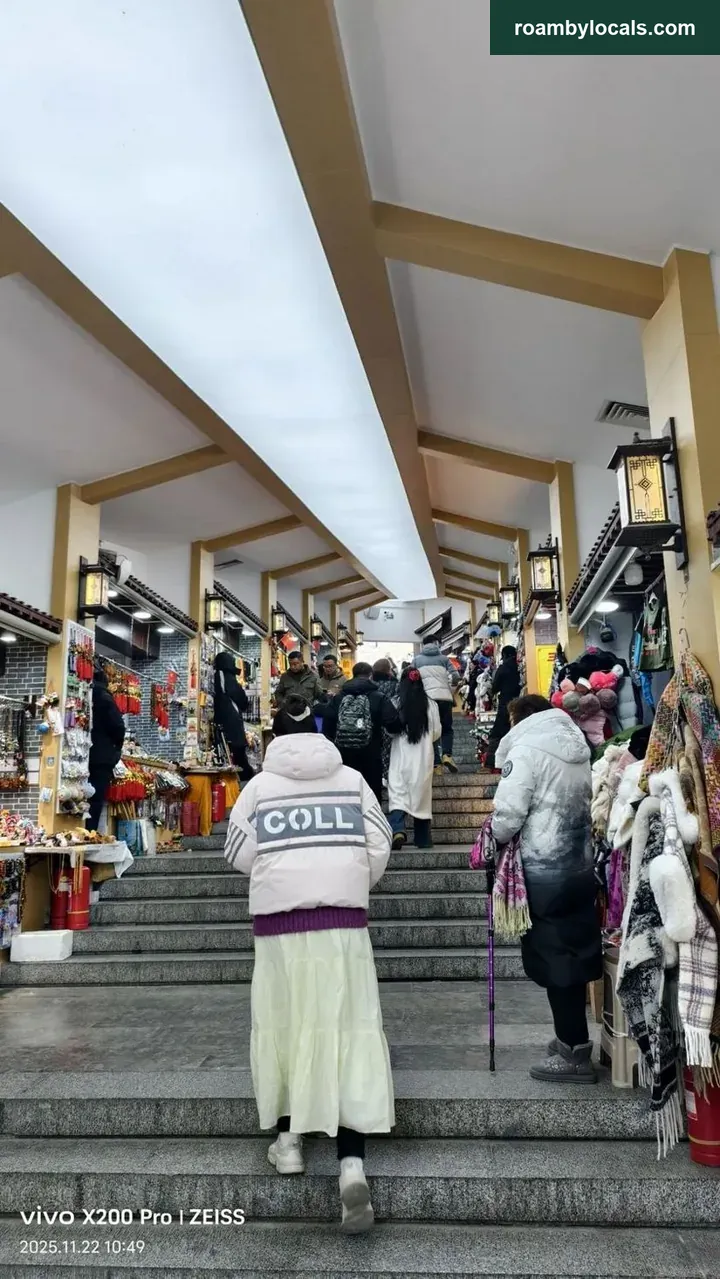
The long approach to the wall was lined on both sides with all kinds of handicrafts, snacks and other things.
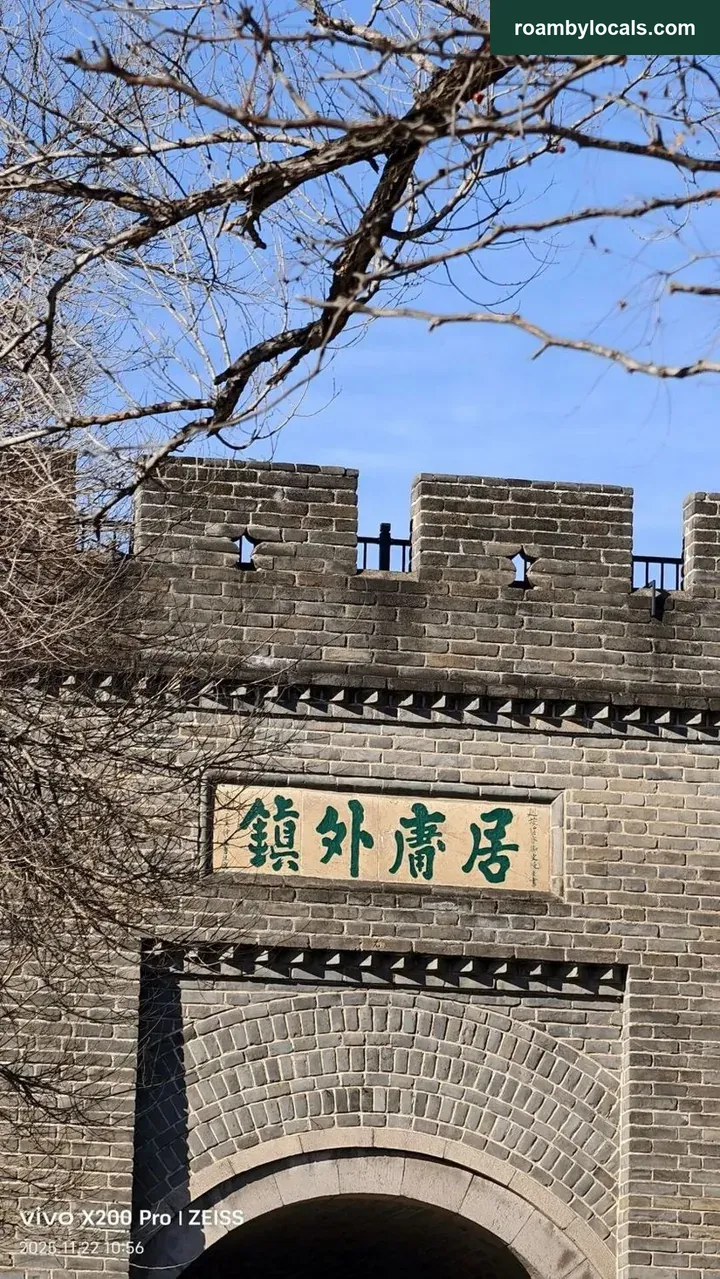
At North Tower One, by the gate marked ‘Outer Defence of Juyong’, we began climbing the wall.
Three ways onto the wall
There were three ways to climb:
1. Walk the whole way. You only needed an admission ticket costing 35 yuan, but it took considerable stamina. Some sections were very steep, and the handrails were slippery and hard to grip, making it easy to fall.
2. Take the railcar from towers 1–4, then walk the remaining sights. This was an option for anyone with a little less stamina.
3. Go straight up by cable car. The cable-car entrance was farther from the walking entrance, a walk of 1.5 kilometres.
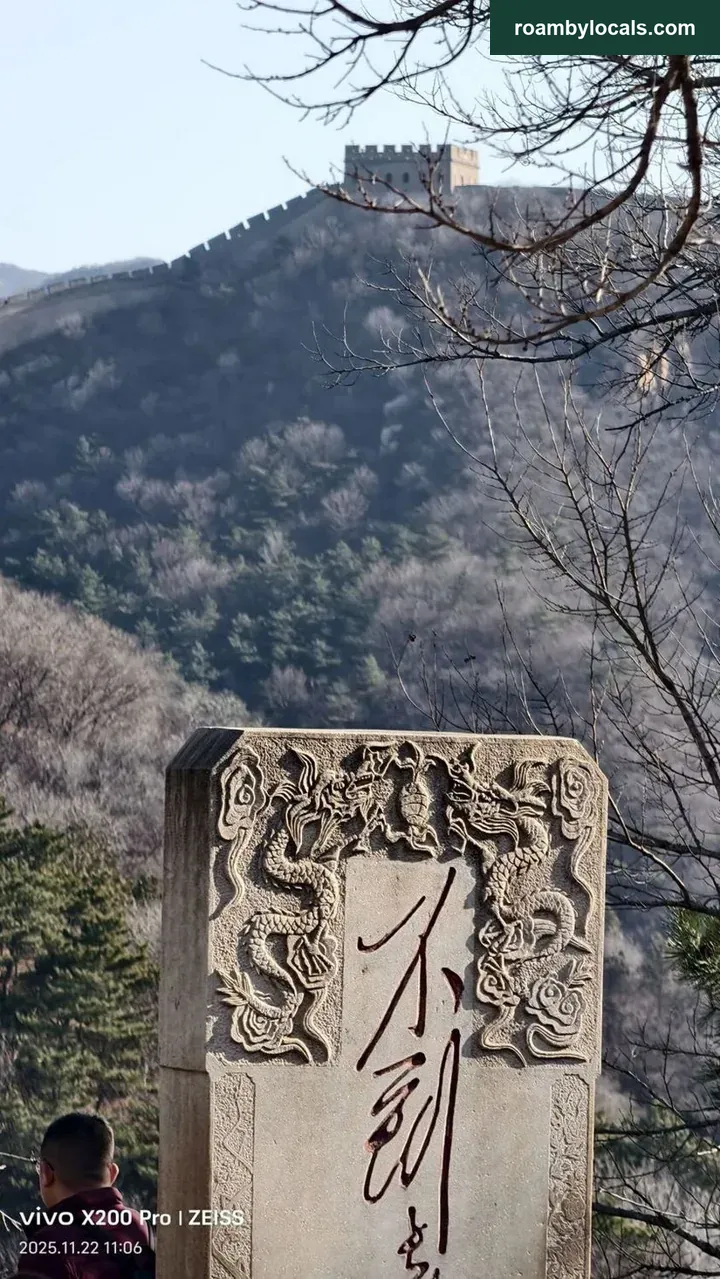
Climbing the northern towers
I climbed hard, all the way to the ‘Hero’s Slope’ stone at North Tower Four. I was so tired that I forgot to take a photograph.
Every lookout at the battlements was packed, and the crowd pushed us along.
It was early winter. Despite the sunshine, the wind was strong. The distant mountains rose and fell in a bleak, austere winter scene.
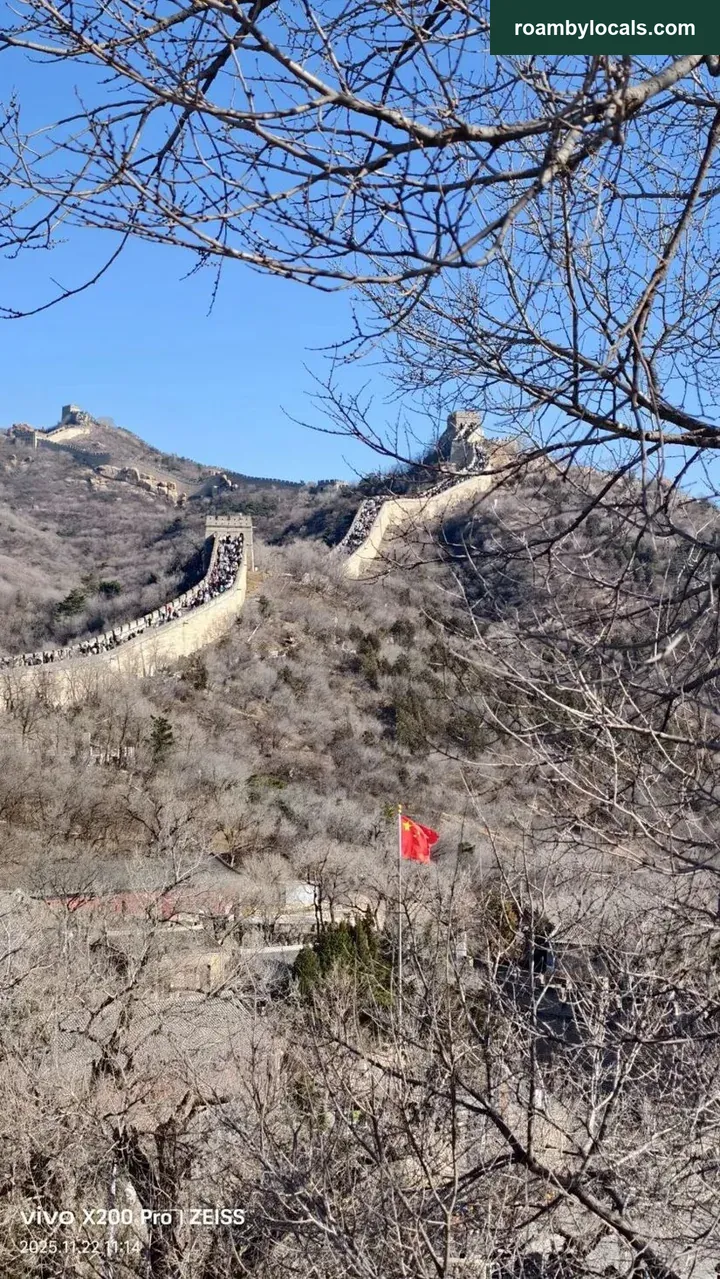
Beyond North Tower Four, the stone steps grew steeper still.
The highest point was North Tower Eight. The almost vertical steps, close to 90°, were quite a thrill: climb them and you will know.
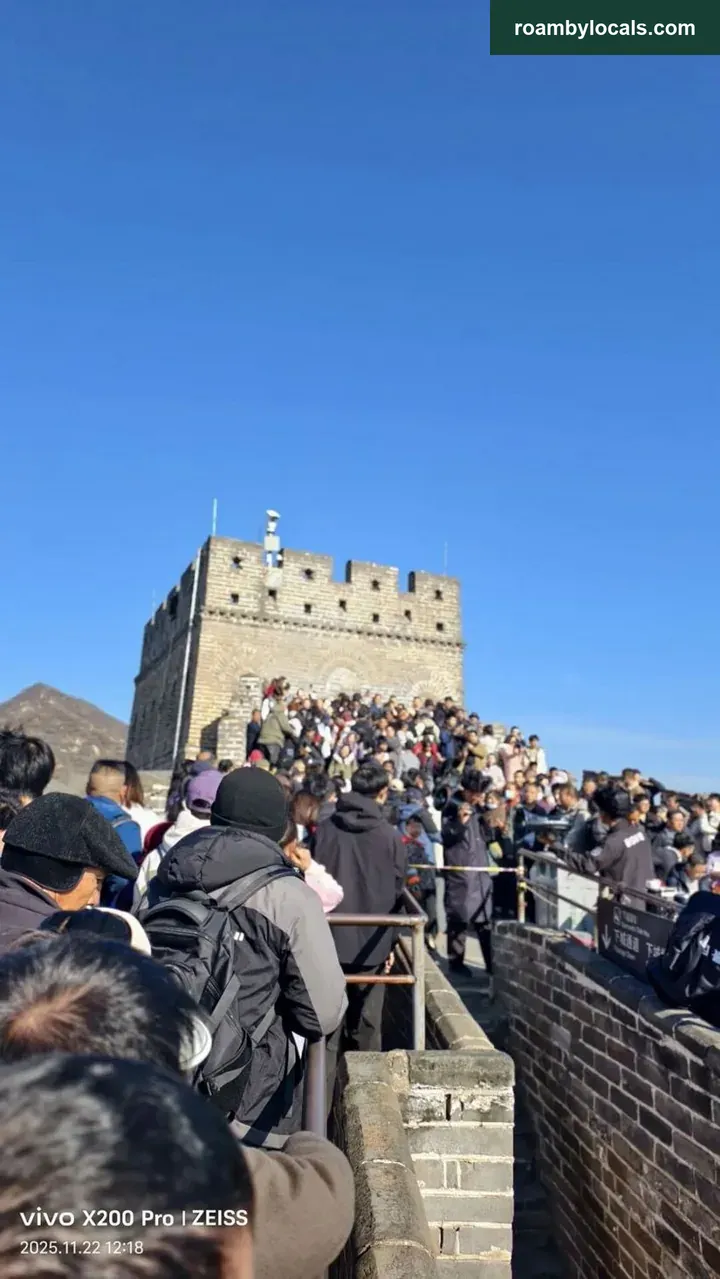
This spot was full of people taking photographs to mark their visit.
Beyond North Tower Eight it was mostly downhill, and you could take photographs with the Great Wall behind you.
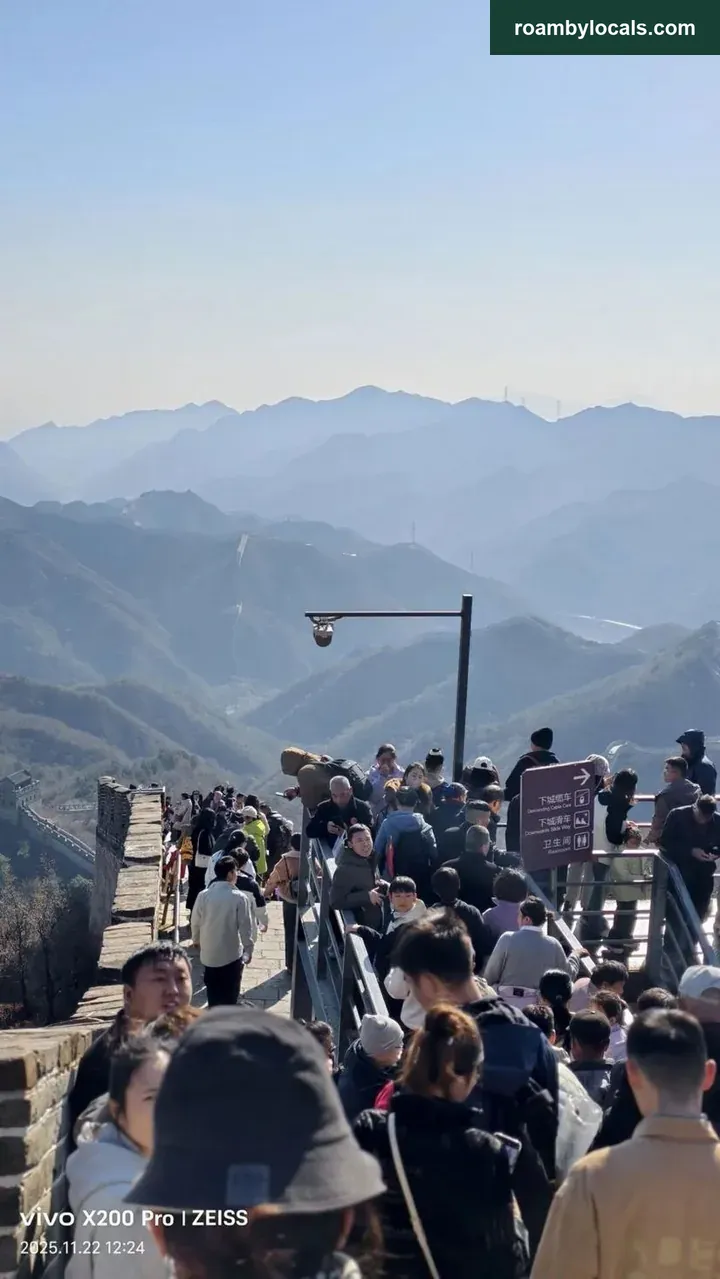
Coming down from the wall
If you had time and energy, you could also return to North Tower One and explore the southern wall. There were fewer people there, and you could look back towards the northern wall.
Usually, people left the wall at North Tower Eleven.
If you were too tired to walk, you could take the railcar here: 80 yuan per person and 3 minutes to the car park, a lifesaver for shaky legs.
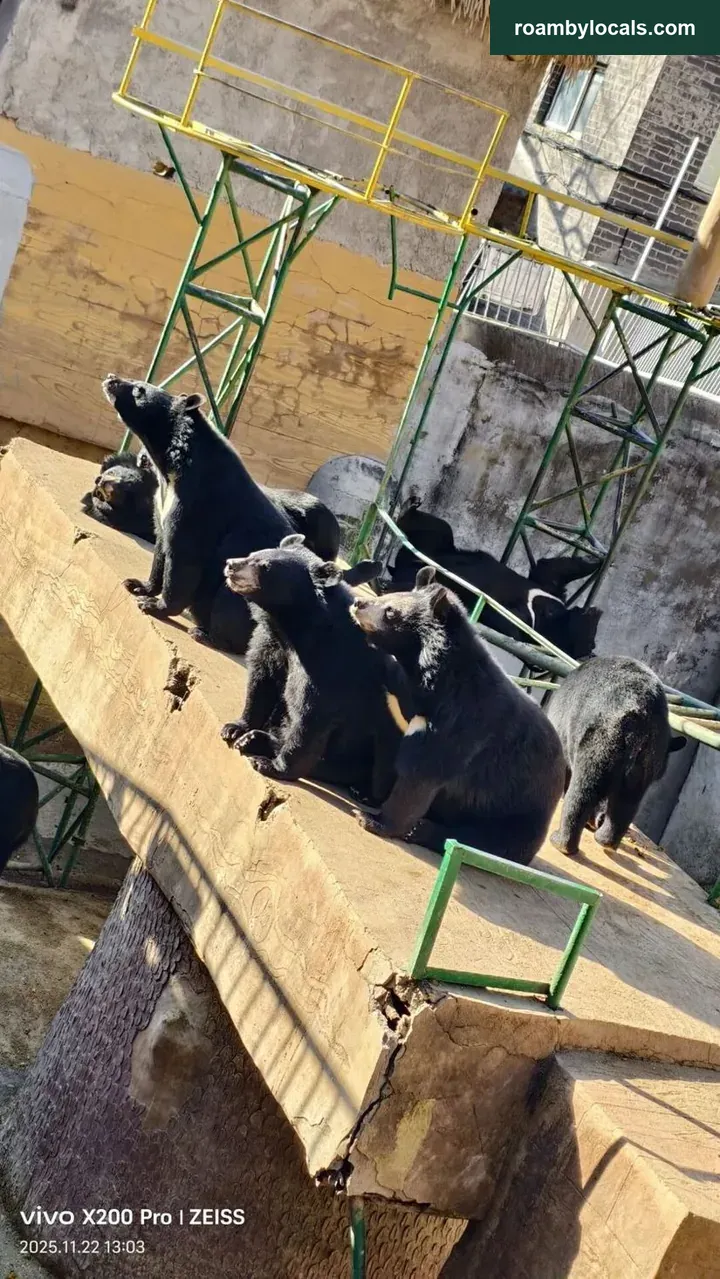
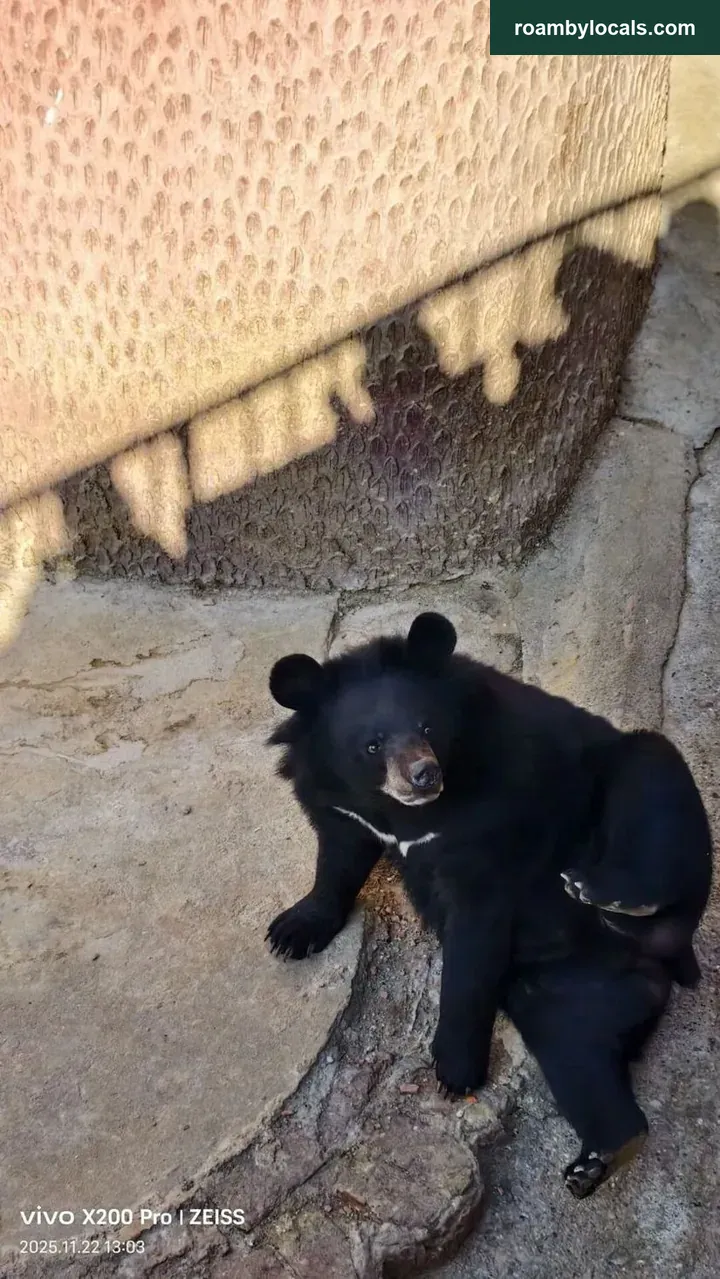
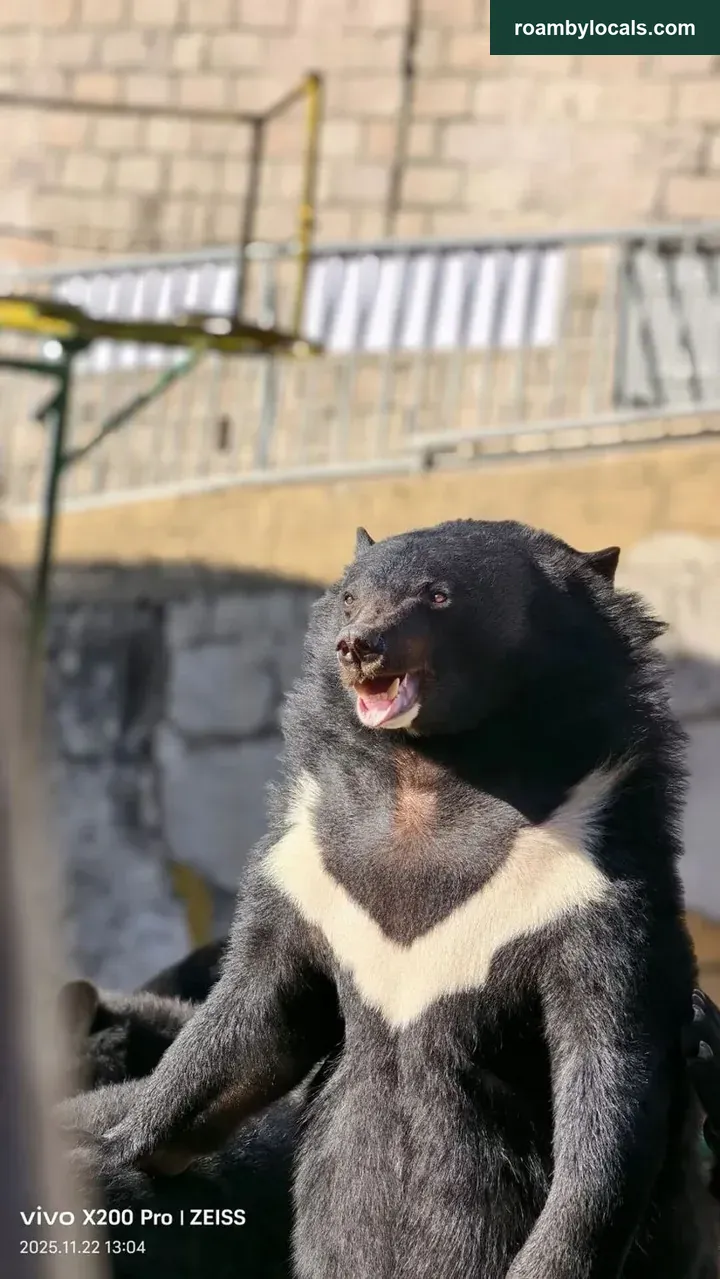
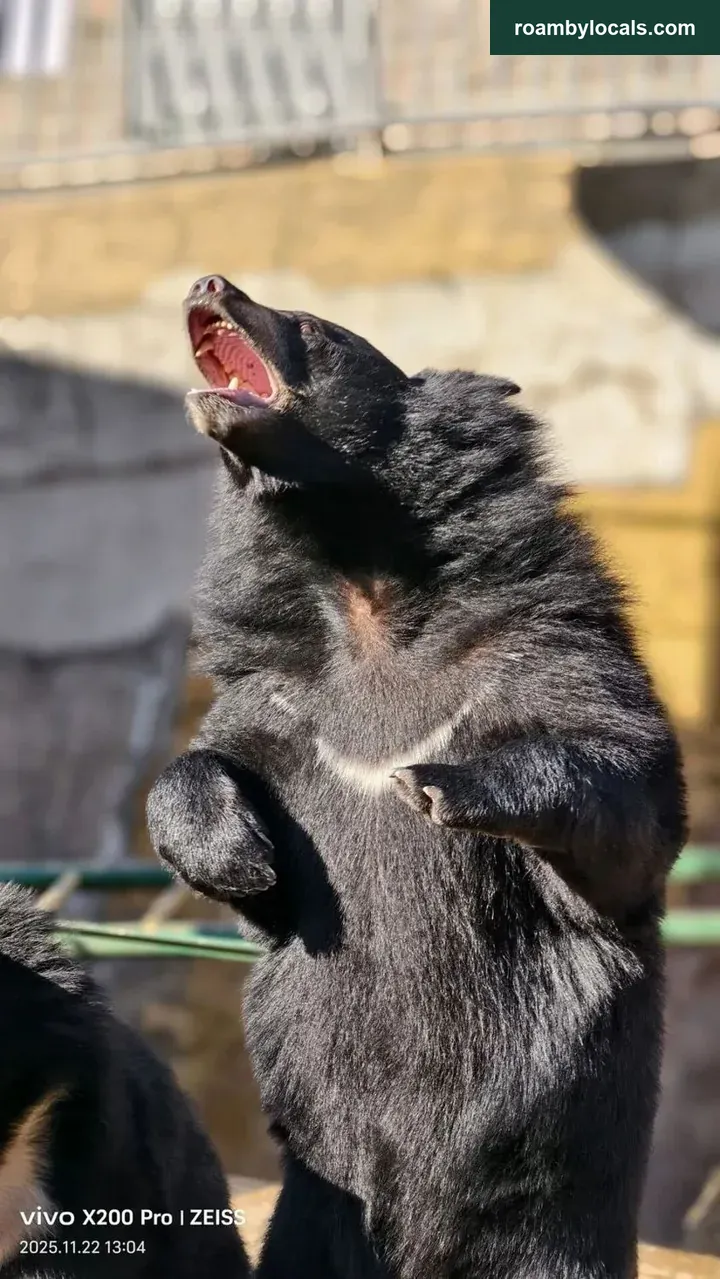
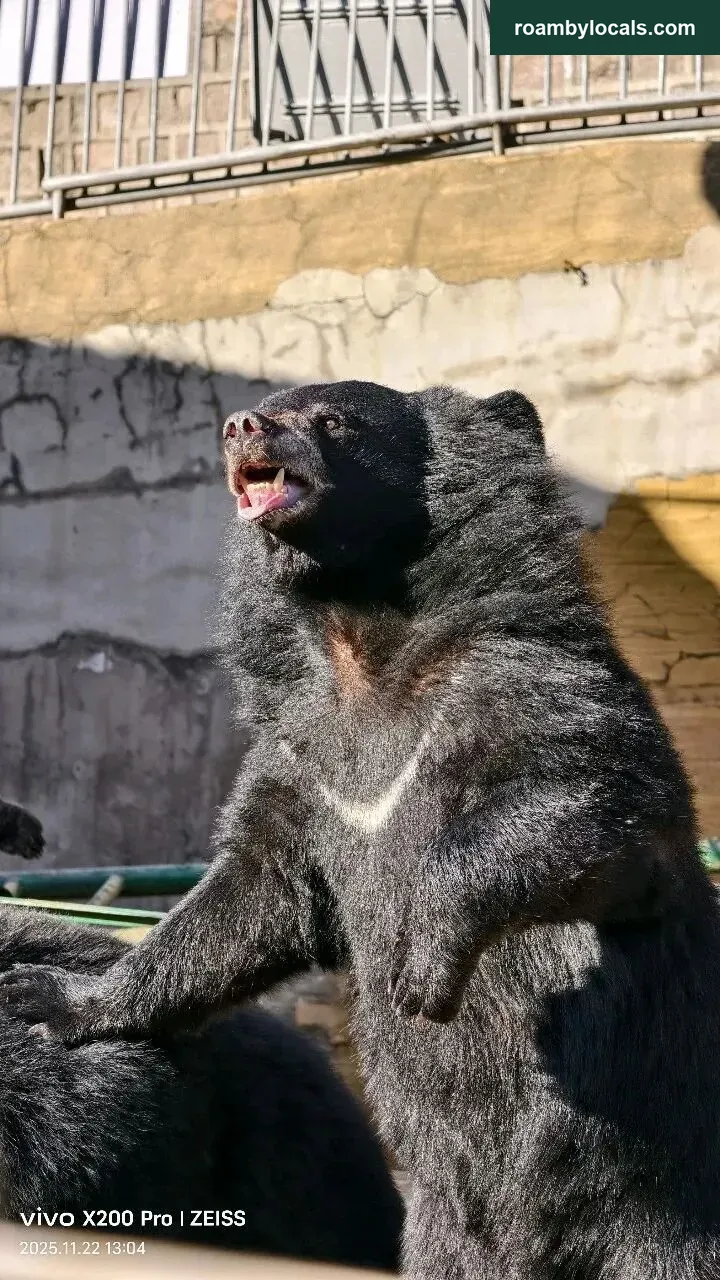
Unexpectedly, there was also a black-bear enclosure at the exit, with about seven or eight bears. When visitors threw them food, they raised both front paws high to compete for it.
Walking time and the journey back
Walking all the way from North Tower One to North Tower Eleven took about three hours. The difficulty and duration suited people under 60.
For the return journey I again chose the bus. Queueing at the exit and boarding directly was very convenient.
After a nap, we were already at the Beitucheng bus stop.
Beitucheng metro station had lines 8 and 10, taking you anywhere in Beijing.
(Author: 心语关怀)